The L'Oréal-Kering Deal Is Not About Fragrance, It's About Who Controls the Next 50 Years of Luxury Scent
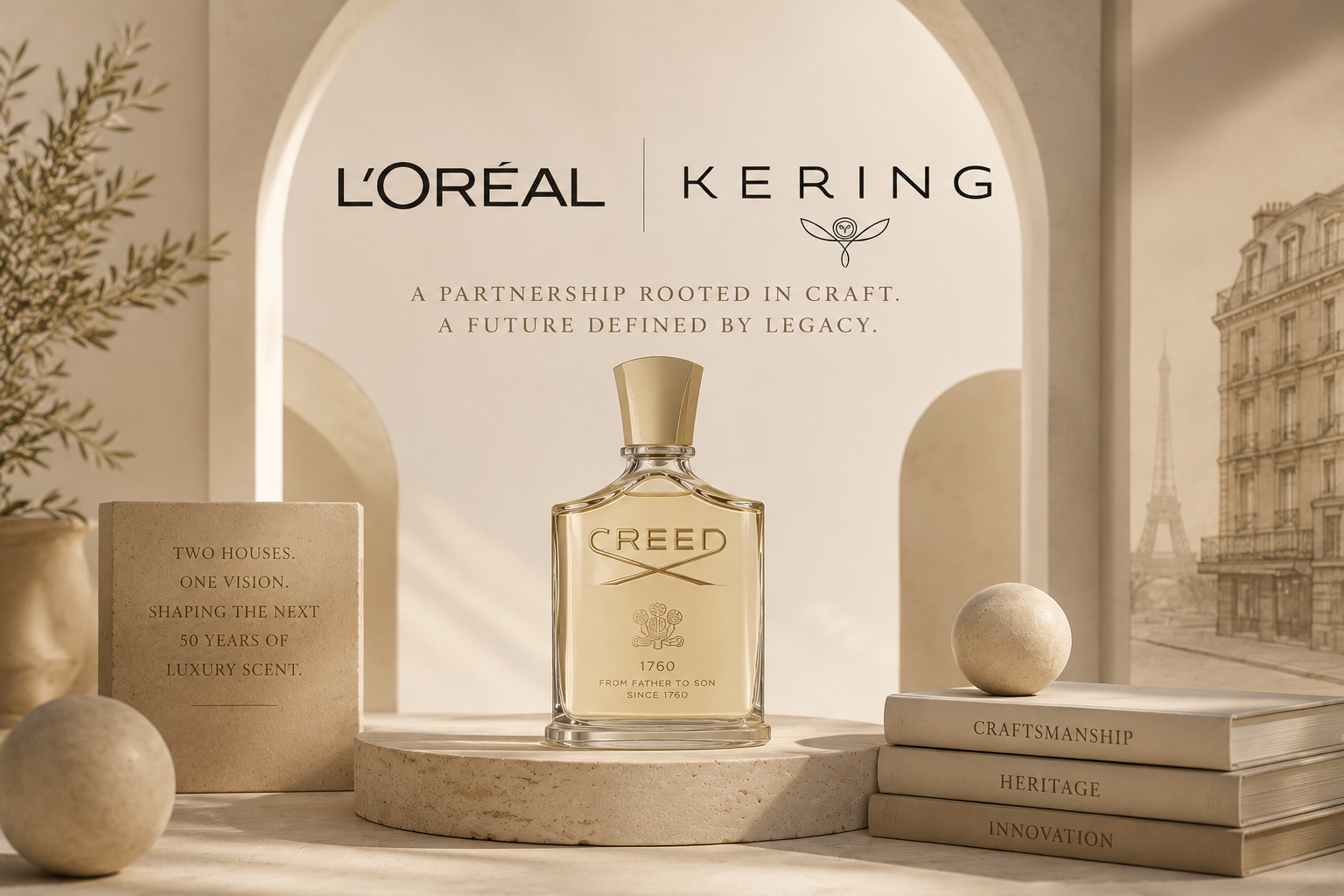
L'Oréal's acquisition of Kering Beauté reshapes luxury fragrance power for the next five decades
The biggest fragrance industry deal in a decade has almost nothing to do with how anything smells. L'Oréal's acquisition of Kering Beauté, including 50-year licensing rights for Gucci, Bottega Veneta, and Balenciaga, is a structural power grab that will quietly determine which scents get made, which stories get told, and which buyers get catered to for the next half century.
Most coverage has treated this as a beauty business story. It isn't. It's a fragrance story. And if you care about what luxury scent actually means, you need to understand what just changed.
Not sure which MAIR fragrance is yours? The quiz takes 60 seconds.
What This Deal Actually Controls
Fifty years is not a licensing term. It's a generation. Two of them, actually. L'Oréal now holds the creative and commercial keys to some of fashion's most culturally loaded names for longer than most of their current customers have been alive.
That's not just market share. That's narrative control. The ability to decide what Gucci smells like in 2045. What Balenciaga means to a consumer in 2060. Which raw materials get prioritized, which perfumers get commissioned, and which directions get killed in development.
Licensing deals of this length don't just scale a portfolio. They calcify one. When a single conglomerate controls this many flagship fashion fragrance houses, the incentive shifts from creative risk to category optimization. Safe amber-musk launches. Flanker seasons. Ingredient costs squeezed to protect margins. Retail data already narrows what fragrances get made , this deal accelerates that narrowing at the highest tier of the market.
This is how luxury starts to smell like less of itself.

What Independent Brands Gain From This Moment
Here's the counterintuitive truth: consolidation at the top creates oxygen at the edges. Every time conglomerates tighten their grip on the mainstream, they inadvertently widen the gap that independent brands exist to fill.
Discerning buyers notice when a luxury house starts to feel like a product line instead of a point of view. They start looking elsewhere. They find their way to founders who built their brands on identity rather than IP acquisition, on intentional creative choices rather than 50-year bets on fashion house nostalgia.
Independent brands are already winning the authenticity war , and deals like this one explain exactly why.
When conglomerates spend billions to control what luxury smells like, independent founders get to decide what it means.
The buyer who understands this shift doesn't abandon luxury. She redefines it. She stops equating price tags and fashion house names with genuine olfactory craft, and starts asking harder questions: Who made this? What were they trying to say? Does this fragrance serve a vision or a volume target?
Why the Fragrance Community Is Paying Attention
The fragrance community has been tracking conglomerate consolidation for years. Five conglomerates already own the scent of luxury in ways most consumers don't realize. This deal reshuffles that map significantly. It moves more of the cultural center of gravity into a single organization's portfolio strategy.
That's not automatically bad. Large organizations have resources. They fund raw material innovation. They give perfumers access to ingredients that smaller houses can't afford at volume. There are real benefits to scale in a supply-chain-intensive industry like fragrance.
But benefits to scale and benefits to the buyer are not the same thing. Scale optimizes for repeatability. Great fragrance requires the opposite.
What This Means for How You Buy
The most powerful thing a fragrance buyer can do right now is buy with intention. Not reactively, not by logo association, and not by what's been algorithmically surfaced to feel aspirational.
Ask who controls the creative vision behind a scent. Ask whether the brand has a reason to exist beyond distribution reach. Ask whether the fragrance you're drawn to was built from a genuine point of view or assembled to perform in a category spreadsheet.
That kind of buying shapes markets. When buyers consistently reward authenticity, the industry eventually follows. It's slow. But it works.
At MAIR, fragrance has always been about identity rather than positioning. Not about occupying shelf space in a conglomerate's portfolio, but about building something that reflects the inner world of the woman wearing it. That's not a business strategy designed to compete with billion-dollar licensing deals. It's a completely different game, played for completely different stakes.
The L'Oréal-Kering deal will reshape the luxury fragrance industry landscape. What it can't do is replace the feeling of wearing something that was made specifically, intentionally, and honestly for you.
That space will always belong to someone who chose to build rather than acquire.
Not sure which MAIR fragrance is yours? The quiz takes 60 seconds.