
Top Notes, Heart Notes, Base Notes: What They Actually Mean
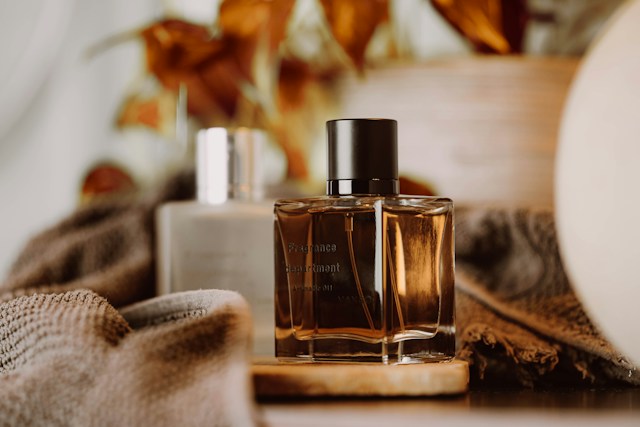
Learn exactly what top notes, heart notes, and base notes are and why the dry-down is what truly matters
Top notes, heart notes, and base notes are the three structural layers of a perfume, each made from ingredients that evaporate at different speeds to create a scent that changes over time on your skin. A fragrance note is a single perceivable scent impression produced by one or more aromatic ingredients at a specific stage of wear. Understanding top notes, heart notes, and base notes explained together tells you exactly why a perfume smells different in the bottle than it does two hours into the day.
What are top notes, heart notes, and base notes in perfume?
Top notes, heart notes, and base notes describe the three evaporation stages of a perfume. Top notes are the lightest molecules, the ones you smell first. Heart notes emerge as the top notes fade and form the core character of the fragrance. Base notes are the heaviest molecules, arriving last and anchoring everything that came before them. The whole sequence is called the dry-down, meaning the full evolution of a fragrance as it settles on skin over time.
The science behind this layering is measurable chemistry, not poetry. According to a 2022 patent on fragrance compositions documented by the U.S. Patent and Trademark Office, fragrance materials are classified into three volatility tiers: top notes have a vapor pressure greater than 0.1 Torr, heart notes fall between 0.0008 and 0.08 Torr, and base notes sit below 0.001 Torr. Vapor pressure, in plain terms, is a measure of how readily a substance turns into vapor at a given temperature. The higher the vapor pressure, the faster the molecule lifts off skin into the air, which is exactly why you smell citrus first and sandalwood last.
As a practical first step, never judge a fragrance only on the first spray. Let it sit on your wrist for at least 20 to 30 minutes before deciding how you feel about it.
Not sure which MAIR fragrance is yours? The quiz takes 60 seconds.
How long does each fragrance layer last on skin?
Top notes typically last 5 to 15 minutes on skin before they fade. Heart notes carry the fragrance for roughly 20 to 60 minutes and represent the truest expression of a perfume's character. Base notes can linger for two to six hours or more, depending on concentration and your individual skin. These are general ranges, not guarantees, because skin chemistry changes the picture significantly.
The layering framework has been formalized in perfumery for over a century. As Wikipedia's entry on perfumery notes, citing W. A. Poucher's foundational reference text, explains, Poucher ranked raw materials on a continuous evaporation scale of 1 to 100, with 1 to 14 classified as top notes, 15 to 60 as middle or heart notes, and 61 to 100 as base notes. That scale is still used in fragrance education today because it gives perfumers a reliable framework for predicting how a finished composition will unfold on the skin.
Some specific notes to know by layer: common top notes include bergamot, lemon, grapefruit, petitgrain, and pink pepper. Heart notes include rose, jasmine, geranium, peony, iris, and ylang-ylang. Base notes include sandalwood, musk, vetiver, cedarwood, amber, and patchouli. These are not rigid categories, and a skilled perfumer may use a heavier ingredient in a surprising position to create tension or depth, but as a starting point these families give you a reliable map.
Why does a perfume smell different after 20 minutes?
A perfume smells different after 20 minutes because the top notes have evaporated, and the heart notes have fully bloomed on your skin. This shift is not a flaw. It's the design. Perfumers build fragrances specifically to evolve, with the top notes acting as an introduction and the heart as the true story. What you smell immediately in the store is not the same fragrance you'll be wearing by lunchtime.
This is worth understanding at a practical level before you buy. The initial brightness of a citrus top note can make a heavy floral heart feel like a surprise, and an opening that smells powdery can open into something green and sharp. Spraying on skin and waiting through the full dry-down, ideally 30 to 60 minutes, gives you an accurate read on what you're actually committing to in a full bottle. If you want to test multiple scents simultaneously without the investment, MAIR's Discovery Kit is a practical way to try each fragrance through its full dry-down before choosing.

How does skin affect how the notes develop?
Skin properties directly affect how fragrance notes evaporate and how long each layer lasts. A 2025 peer-reviewed study published in the International Journal of Cosmetic Science by Hadjiefstathiou et al. found that well-moisturized, less rough skin retains fragrance molecules longer than dry or rough skin. The study specifically identified hydration, transepidermal water loss, and skin roughness as the variables that most influence evaporation rate. This means the same fragrance can unfold differently on two different people wearing it in the same room.
The practical implications are real. Dry skin tends to accelerate evaporation, which can mean top notes disappear faster, heart notes are briefer, and base notes feel thinner than they would on well-moisturized skin. Applying an unscented body lotion before spraying your fragrance creates a richer surface for the molecules to adhere to. Focus application on pulse points, your inner wrists, the base of your throat, and the inside of your elbows, where warmth from the body gently aids diffusion throughout the day.
Skin pH also plays a role in how notes develop and how true they read on your body. You can read more about that in our post on skin pH and how to choose a perfume that works best for you.
The first thing you smell when you spray a perfume is the last thing that defines it. Wait for the dry-down before you decide.
Why do base notes matter most when choosing a fragrance?
Base notes matter most when choosing a fragrance because they are the layer you wear longest. After the top and heart notes have faded, the base notes are what remain on your skin for hours. They form the foundation of a fragrance's character, give it staying power, and determine the impression a fragrance leaves at the end of the day. If the base notes don't suit you, no amount of lovely top-note brightness will compensate.
Common base note ingredients include sandalwood, vetiver, cedarwood, benzyl benzoate, musk, and ambergris. Each one has a distinct weight and character. Vetiver is smoky and rooty. Sandalwood is creamy and warm. Musk is soft and skin-like. Benzyl benzoate, a compound that appears frequently in heavy floral and oriental compositions, acts partly as a fixative, which means it helps slow the evaporation of other ingredients around it and extends the life of the overall fragrance. Understanding which base note families appeal to you is one of the most reliable shortcuts to finding a fragrance you'll love consistently.
It's also worth noting that the safety of base note materials, like all fragrance ingredients, is evaluated rigorously. The Research Institute for Fragrance Materials (RIFM), a global non-profit scientific organization founded in 1966, maintains a database of more than 8,000 fragrance materials supported by over 80,000 references, with all safety assessments reviewed by an independent expert panel. For a deeper look at how ingredients are sourced and formulated before they ever reach a bottle, the post on how perfume is made covers the full process.
Does concentration change how the notes perform?
Concentration changes how intensely each note layer registers and how long each one lasts on skin. A higher concentration of aromatic compounds means more fragrance material per milliliter of product, which generally extends the life of all three layers. Eau de parfum (EDP), typically 15 to 20 percent aromatic compounds, will give a fuller heart note and a richer base than an eau de toilette (EDT) at 8 to 12 percent. The top note may feel more pronounced in both, but the real difference shows up in the dry-down.
For anyone deciding between concentrations, the table below summarizes the key differences across the three note layers.
| Concentration | Aromatic Compound % | Top Note Duration | Heart Note Duration | Base Note Duration |
|---|---|---|---|---|
| Eau de Cologne (EDC) | 2 to 5% | 5 to 10 minutes | 15 to 30 minutes | 1 to 2 hours |
| Eau de Toilette (EDT) | 8 to 12% | 10 to 15 minutes | 20 to 45 minutes | 2 to 3 hours |
| Eau de Parfum (EDP) | 15 to 20% | 10 to 20 minutes | 30 to 60 minutes | 3 to 6 hours |
| Parfum / Extrait | 20 to 40% | 15 to 20 minutes | 45 to 90 minutes | 5 to 8 hours or more |
These ranges are approximations. Individual skin chemistry, application method, climate, and the specific materials used in a formula all shift the actual result. A fragrance built with heavy base note resins at an EDP concentration will consistently outlast an EDP that uses lighter musks in the base. For a detailed guide to how concentration affects longevity and performance, see our post on which fragrance category lasts the longest.
Quick Answers to Common Questions
Can you smell all three note layers at once when you first spray a perfume?
When you first spray a perfume, the top notes are dominant and the heart and base notes are present but largely masked by the faster-evaporating molecules on top. As top notes lift off over 5 to 15 minutes, the heart becomes audible, and the base becomes fully perceptible after 30 to 60 minutes of wear.
Why do some perfumes smell great in the bottle but wrong on my skin?
A fragrance smells different on skin than in the bottle because skin temperature, pH, and hydration all influence how molecules evaporate and interact. The bottle contains the full composition in an unevaporated state, while your skin activates the layers sequentially. A patch test on your wrist for 30 minutes gives a far more accurate reading than a cap or strip test.
Are heart notes always floral in women's perfumes?
Heart notes are not always floral, though florals such as rose, jasmine, peony, and iris are common heart note ingredients because their natural volatility places them in the middle evaporation range. Heart notes can also be spicy, green, fruity, or aquatic depending on the fragrance family the perfumer is building toward in the base.
Does wearing perfume on clothes preserve the top notes longer?
Applying fragrance to fabric can extend the life of certain notes because fabric does not generate body heat the way skin does, slowing evaporation. However, the development of heart and base notes is less pronounced on fabric than on skin, since the warmth of skin is what drives the sequential unfolding of the dry-down. For the full experience of a fragrance, skin application gives the most accurate result.
Fragrance is one of the most intimate choices a woman makes about how she presents herself to the world, and understanding the structure behind it gives you real power in that choice. When you know what to look for in a dry-down, you stop making decisions based on a 30-second first impression and start finding scents that feel like a true expression of who you are.
Not sure which MAIR fragrance is yours? The quiz takes 60 seconds.