Best Oud Perfumes: How to Find an Oud Fragrance That Doesn’t Smell Heavy
Oud is one of the world's most complex ingredients. Here's why most versions disappoint, and how to find one that doesn't.
Oud has a problem. Not with the ingredient itself, which is genuinely one of the most layered, historically rich materials in all of perfumery. The problem is what's been done to it.
Walk through any fragrance counter right now and you'll smell a dozen ouds that hit the same note: sharp, synthetic, slightly medicinal, and gone by lunch. The conversation has never been louder around this ingredient, and yet most people experiencing it for the first time are getting a hollow version of something that deserves so much better.
If oud has disappointed you before, that's not a you problem. That's a formulation problem.
Not sure which MAIR fragrance is yours? The quiz takes 60 seconds.
What Real Oud Actually Smells Like
Real oud, also called agarwood, comes from the resinous heartwood of Aquilaria trees. When the tree becomes infected with a specific mold, it produces a dark, dense resin as a defense response. That resin is what perfumers harvest. It takes decades to form and the extraction process is painstaking, which is why genuine oud is one of the most expensive raw materials on earth. That cost isn't accidental.
Authentic oud smells like warm wood, yes. But also leather, dried fruit, dark honey, incense smoke, and something almost animalic underneath. It shifts on skin. It tells a story over four or six or eight hours. It's never flat.
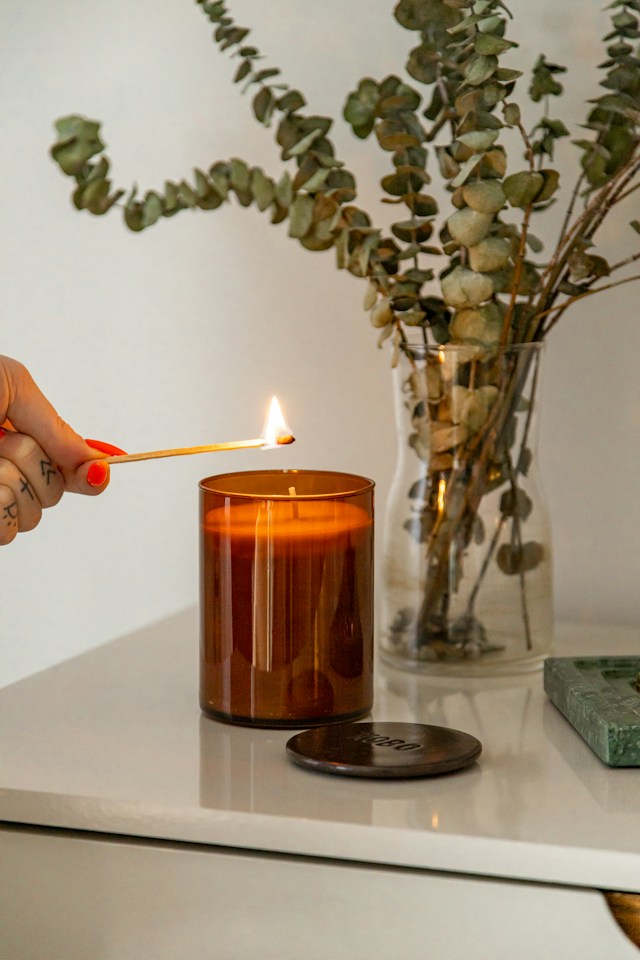
What most people smell in mainstream oud fragrances is a synthetic approximation built to hit one note fast and cheap. It smells like a candle because it was designed to function like one: one-dimensional, predictable, built for mass appeal.

Why Synthetic Oud Falls Short
Synthetic oud molecules exist because real oud is scarce and expensive. That's not inherently a problem. Good perfumers use synthetics thoughtfully, pairing them with naturals to build depth. The issue comes when a formula leans entirely on synthetic oud and stops there, with no supporting materials to create the warmth, complexity, or skin chemistry that makes oud genuinely compelling.
When oud has no companions, it overshoots. It smells aggressive for twenty minutes and then evaporates into nothing. It doesn't evolve. It doesn't respond to your body heat or your skin's natural chemistry. Skin pH plays a significant role in how an ingredient like oud develops, and a thin, synthetic-only formula gives that chemistry nothing to work with.
Great oud needs partners. Sandalwood to smooth its rough edges. Rose or saffron to pull out its sweeter, more sensual registers. Amber or benzoin to give it warmth that lasts. Musk to anchor it to skin. When those relationships are built correctly, oud stops smelling like a candle and starts smelling like a person.
Oud doesn't belong in a candle. It belongs on a person who knows exactly who they are when they walk into the room.
How to Shop Oud Without Getting Burned Again
Start with the ingredient list. If oud sits alone in a fragrance with little else to ground it, manage your expectations. Look for formulas where oud appears alongside resins, woods, or florals. Complexity in the notes usually signals complexity in the bottle.
Pay attention to longevity. A well-constructed oud fragrance should shift through at least two or three distinct phases on your skin. The opening might be smokier, the heart warmer, the dry-down closer and more intimate. Concentration matters here too, with extrait and parfum concentrations giving oud the richness it needs to actually perform.
And test on skin, not paper. Oud is one of the most skin-reactive materials in perfumery. A strip tells you almost nothing. Your wrist tells you everything.
Where MAIR Comes In
MAIR's Remember When was built around exactly this problem. Founder Mair Emenogu wanted an oud that felt intimate rather than loud, that opened with warmth and settled into something that felt entirely personal. The formula pairs oud with sandalwood and amber to create a dry-down that doesn't announce itself to a room. It whispers to whoever is close enough to matter.
That approach runs through everything MAIR does. Fragrance here isn't about performance or volume. It's about identity. The question isn't how far your scent travels. It's whether the person wearing it feels like themselves, or more accurately, feels like the version of themselves they're working toward.
Oud at its best does that. It grounds you. It carries history and complexity and a quiet kind of authority that synthetic shortcuts simply can't replicate. You've always deserved the real thing. Now you know where to find it.
Not sure which MAIR fragrance is yours? The quiz takes 60 seconds.