How to Host the Perfect Perfume Making Party
Everything you need to turn a girls' night into a full sensory experience worth remembering
A perfume making party is one of the most intimate, creative, and genuinely unforgettable ways to spend time with the people you love. Better than a paint-and-sip. More personal than a wine tasting. And far more likely to end with something you'll actually keep using.
The concept is simple: gather your people, set up a blending station, and spend a few hours exploring fragrance notes together. The execution, though, is what separates a chaotic mess of dropper bottles from a truly special evening. Get the details right and you're hosting an experience people will talk about for months.
Here's exactly how to do it.
Not sure which MAIR fragrance is yours? The quiz takes 60 seconds.
Start with education, not ingredients
Before anyone touches a bottle, give your guests thirty seconds of context. Fragrance is built in layers: top notes are what you smell in the first ten minutes, heart notes are the soul of the scent, and base notes are what lingers hours later. Musks, woods, and resins live at the base. Citrus and green notes sit at the top. Florals and spices hold the middle.
That's genuinely all they need to know to start making smart decisions. If you want to go deeper, this breakdown of how perfume is made covers the full process in a way that's accessible and fascinating without being overwhelming.
Build a note kit your guests can actually work with
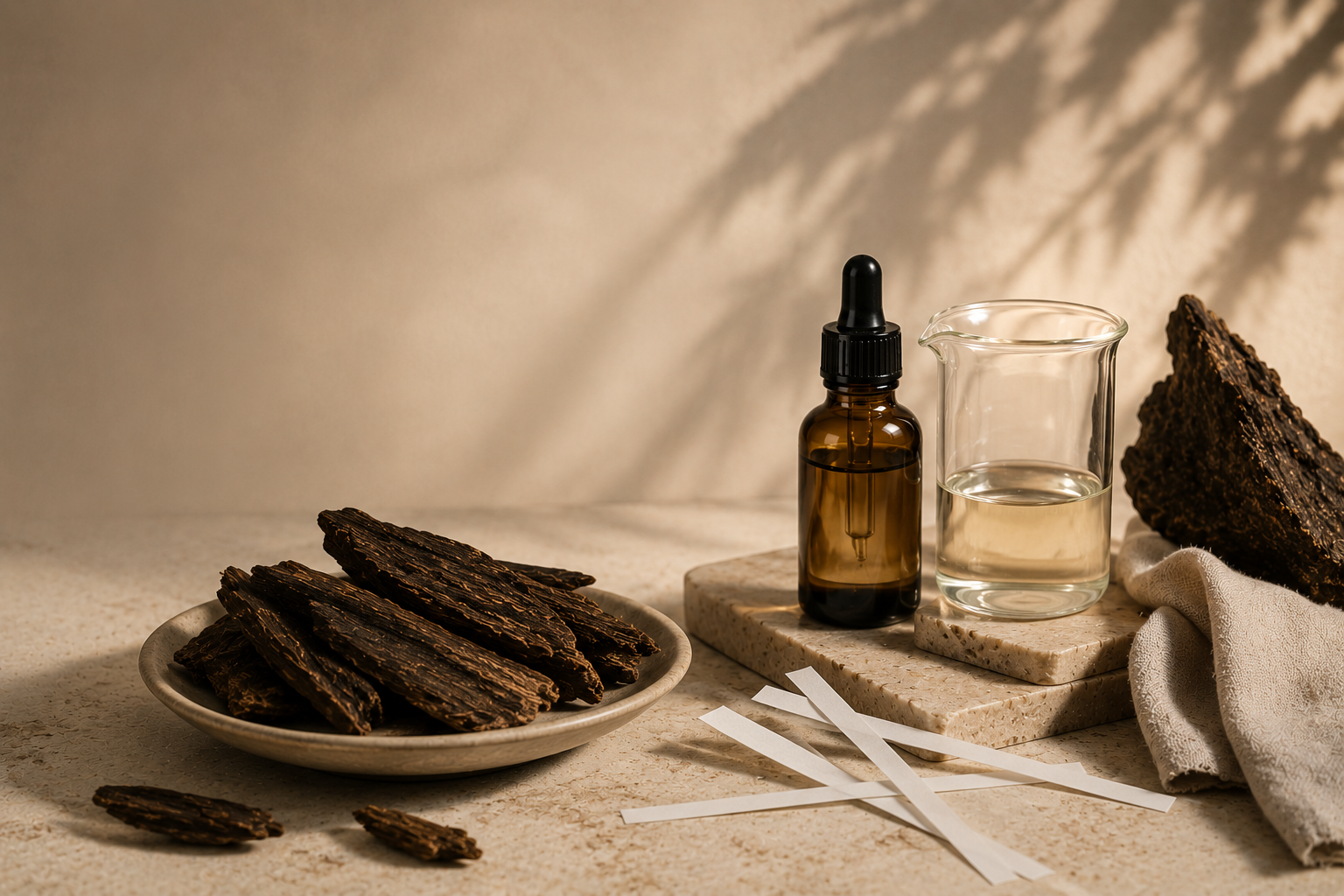
Less is more here. Offer six to ten individual fragrance materials rather than an overwhelming wall of options. Think one citrus (bergamot works beautifully), one white floral (jasmine or muguet), one fresh aquatic, one warm amber, one woody note like sandalwood or cedarwood, and one soft musk. That range covers enough territory for everyone to build something distinct without decision fatigue setting in.
Source your materials from a reputable fragrance supply house and dilute everything to ten percent concentration in a carrier alcohol before the party. Undiluted aromachemicals are too potent for a casual setting and can skew perception fast. Pre-diluted materials give guests an honest feel for what each note actually smells like in a finished formula.
Keep a small dish of coffee beans on the table. Smelling coffee for about thirty seconds resets your nose when the notes start blurring into each other. It works. Use it often.

Set the space intentionally
Fragrance and environment are inseparable. Choose a room with good ventilation so the accumulated scent from multiple open bottles doesn't cloud everyone's judgment. Natural light helps too. Keep the room temperature comfortable but slightly cool. Heat accelerates volatility and makes top notes disappear faster than they should in a blending session.
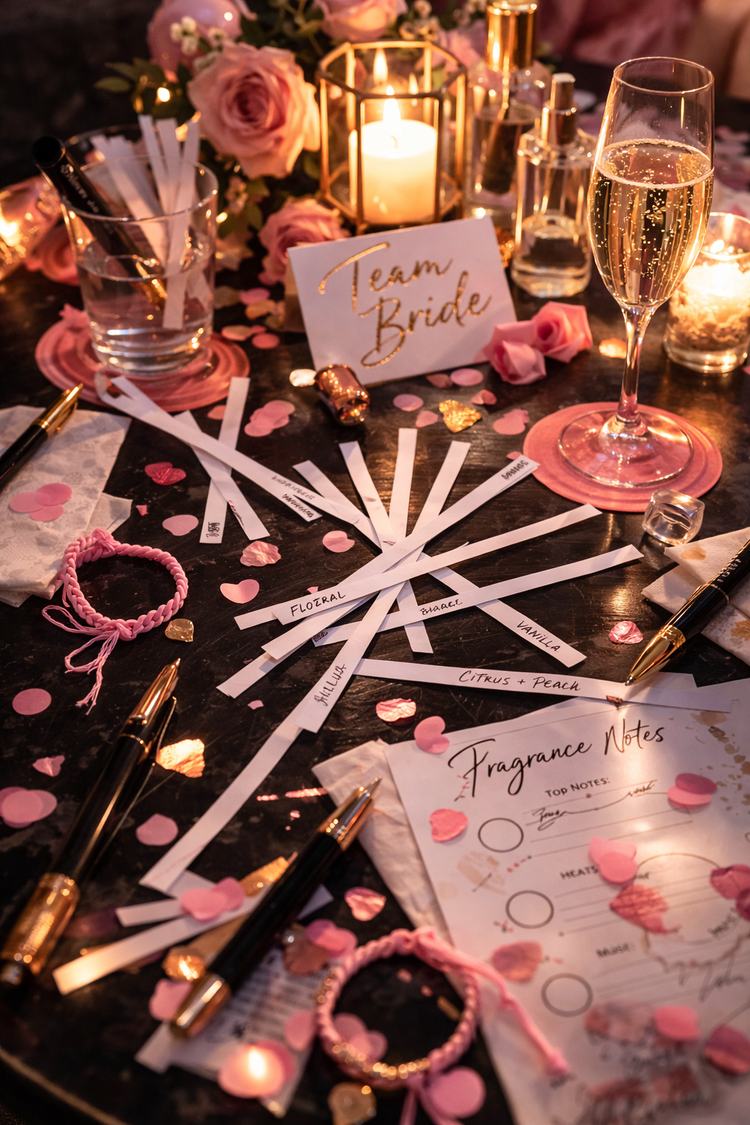
Label every bottle clearly. Have small paper testing strips (blotter strips) available in generous quantity. Set out small glass vials with tight-fitting lids so guests can store their finished blends. A simple label sticker where they write the name they give their scent turns a fun activity into a proper keepsake.
Put on a low, ambient playlist. Nothing with lyrics that demand attention. The goal is a space that feels both focused and relaxed.
The scent you build for yourself tells you something about yourself. That's the whole point of the evening.
Give everyone a formula framework, not a free-for-all
A loose structure prevents the blank-page panic that hits when guests stare at ten bottles and feel genuinely lost. A reliable starting point: thirty percent top notes, fifty percent heart notes, and twenty percent base notes by drop count. That ratio doesn't produce perfect perfume every time, but it produces something wearable and coherent almost every time.
Encourage guests to build slowly. Add two or three drops of each chosen note, smell the blotter, then adjust. The temptation is to keep adding. The discipline is to pause, evaluate, and only add when you know what you want more of. Understanding how notes interact with each other makes that process feel intentional rather than accidental.
Make the reveal part of the experience
At the end of the session, go around the room. Each guest names their blend, describes what they were going for, and lets everyone else try it on skin. Skin chemistry changes everything. A blend that smells sharp on paper softens and opens on a warm wrist. That moment of transformation is always the highlight of the evening.
It's also the moment that makes fragrance feel personal in the deepest sense. The same notes smell different on different people because of individual skin pH, body chemistry, and moisture levels. Two guests using identical formulas will leave with genuinely different scents. That's not a flaw. That's the whole point.
Fragrance, at its core, is identity made sensory. A perfume making party doesn't just fill an evening. It gives every person in the room a quiet, unhurried moment to ask what they actually want to smell like and what that choice says about who they are. That's the MAIR way of thinking about it: fragrance isn't decoration. It's expression. And the best expressions are always intentional.
Not sure which MAIR fragrance is yours? The quiz takes 60 seconds.