The Fragrance Note Men Love the Most
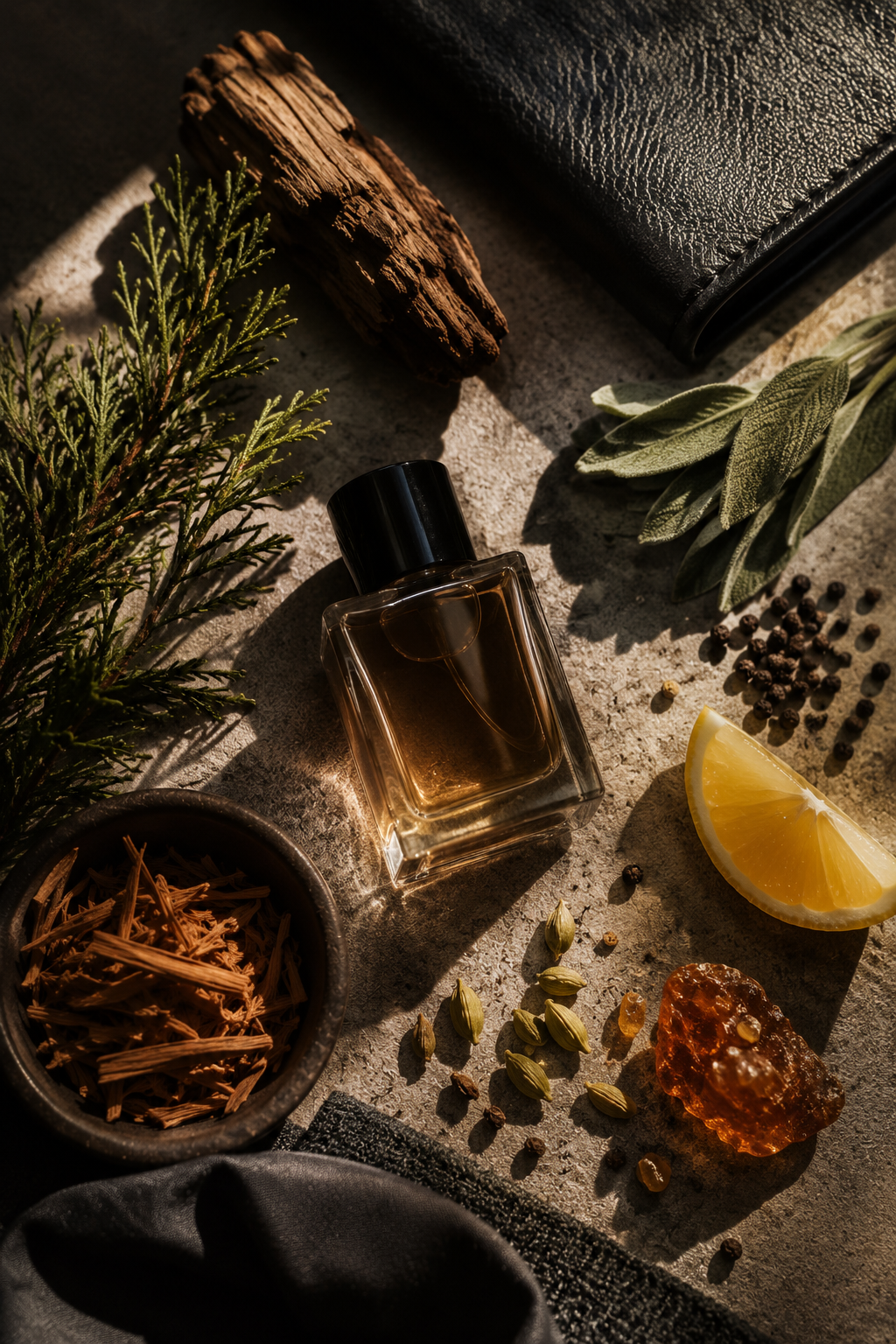
Wood, smoke, and skin: the one fragrance note men reach for again and again
The most loved fragrance note by men isn't the freshest, the flashiest, or the most expensive. It's the one that smells like something remembered. Sandalwood has held its position at the top of men's fragrance preferences for decades, and it's not by accident.
Ask any perfumer what note anchors a masculine fragrance and they'll say the same thing: wood. Specifically, the warm, creamy, skin-close drydown of sandalwood. It doesn't announce itself. It settles into the skin and stays there, which is exactly why men keep reaching for it.
Sandalwood belongs to the oriental and woody fragrance families, the two categories that consistently dominate men's bestseller lists worldwide. Where aquatic and citrus notes open a fragrance beautifully, they tend to fade within two hours. Sandalwood is a base note, meaning it's built to last and designed to deepen as the day moves forward.
Not sure which MAIR fragrance is yours? The quiz takes 60 seconds.
Why sandalwood specifically
Sandalwood has a chemical quality that mimics warm skin. Its primary aromatic compounds, santalol molecules, sit at a frequency that the human nose reads as intimate and familiar. It's not a note you smell from across a room. It's a note someone discovers when they're already close.
That proximity effect is exactly what makes it so universally compelling. Studies in scent preference consistently show men gravitating toward notes that feel personal rather than performative, sandalwood delivers that without trying.
It also plays well with nearly every other note in the perfumer's palette. Pair it with black pepper and you get structured warmth. Pair it with cardamom and you get spiced depth. Layer it against bergamot and the citrus suddenly has somewhere interesting to land. Understanding how to layer fragrances unlocks everything sandalwood can do.
The note also has legitimate staying power. On skin with a neutral to slightly acidic pH, sandalwood can project for six to eight hours without reapplication. Your skin chemistry shapes how any fragrance performs, and sandalwood is one of the most forgiving base notes across different skin types.

The geography of the note
Not all sandalwood is equal, and what's inside the bottle matters more than most people realize. Mysore sandalwood from Karnataka, India is considered the most prized in the world, carrying a richer, creamier character than its Australian counterpart. Australian sandalwood is drier, lighter, and more sustainably harvested at scale, which is why it dominates modern perfumery. Both are legitimate. Both smell distinct.
There's also a synthetic variant used widely in commercial fragrance: Amyris and Javanol are two lab-created molecules that replicate sandalwood's warmth without depleting wild tree populations. This is where the conversation about ingredient sourcing and the real cost behind luxury fragrance becomes relevant. A truly elevated sandalwood fragrance costs more because real sandalwood is rare, slow-growing, and increasingly regulated.
Mysore sandalwood trees take thirty years to mature before harvesting. That single fact explains why an ounce of pure sandalwood oil can reach thousands of dollars at auction.
The note men love most isn't the loudest one in the room. It's the one that stays when everything else has gone.
What this note says about identity
Fragrance preference is never arbitrary; the dominance of sandalwood in men's fragrance tells you something real about what men want to project and how they want to be perceived. Warm, grounded, unhurried. A note that doesn't need to compete.
That's a different kind of confidence than the sharp citrus blast or the aggressive synthetic musk that defined mass-market men's fragrance in the nineties and early two-thousands. Sandalwood is the note of someone who already knows.
At MAIR, Acqua Di Lusso carries sandalwood in its base alongside aquatic and citrus top notes, exactly because that contrast between breezy freshness and warm wood depth creates something genuinely interesting on skin. It's not a simple fragrance. It's a conversation between notes that rewards the person wearing it.
Fragrance has always been a form of identity. Not a statement you make once, but a language you speak every day. The fact that sandalwood sits at the center of men's fragrance culture isn't a trend. It's a tell. The note people return to most is always the one that makes them feel most like themselves.
Not sure which MAIR fragrance is yours? The quiz takes 60 seconds.