Where Do Perfume Ingredients Come From? The Most Overlooked Source in Fragrance
The best perfume ingredients don't come from a lab. They come from somewhere most people never think to look.
The fragrance world has a sourcing blind spot, and it's costing perfumers some of their most compelling raw materials. While the industry fixates on established supply chains in southern France and the spice routes of the Middle East, a quieter, richer source has been hiding in plain sight: indigenous agricultural communities, overlooked ecosystems, and the ethnobotanical knowledge held by cultures that have worked with plants for centuries before modern perfumery existed.
This isn't a romantic idea. It's a practical one. Some of the most distinctive, emotionally resonant fragrance ingredients on the market right now trace back to regions and communities that weren't on any perfumer's sourcing map ten years ago.
Understanding where ingredients actually come from changes how you understand fragrance itself. If you want to go deeper on that, this breakdown of how perfume is made is a good place to start.
Not sure which MAIR fragrance is yours? The quiz takes 60 seconds.
The obvious sources get all the attention
Grasse gets its flowers. Madagascar gets its vanilla. The oud trade follows well-worn paths through the Gulf. These are real, important sources, and the craft behind them is extraordinary. The jasmine growers of Grasse alone represent generations of agricultural precision that most people never think about when they spritz a fragrance in the morning.
But the obsession with these established origins has created a sourcing monoculture. Perfumers keep returning to the same wells, and the result is a fragrance landscape that often smells more similar than it should.
What gets left out of the conversation
Haitian vetiver has been commercially available for decades, but the villages growing it rarely see equitable returns or get credited for their cultivation knowledge. Australian sandalwood is rising in prominence, but Aboriginal land management practices that shaped those ecosystems for thousands of years are still largely uncredited in fragrance marketing. Himalayan herbs used in Ayurvedic tradition contain aromatic compounds that Western perfumery is only beginning to isolate and work with seriously.
These aren't edge cases. They're the actual frontier of ingredient sourcing, and they represent a massive opportunity for perfumers willing to look past the standard supplier catalogue.

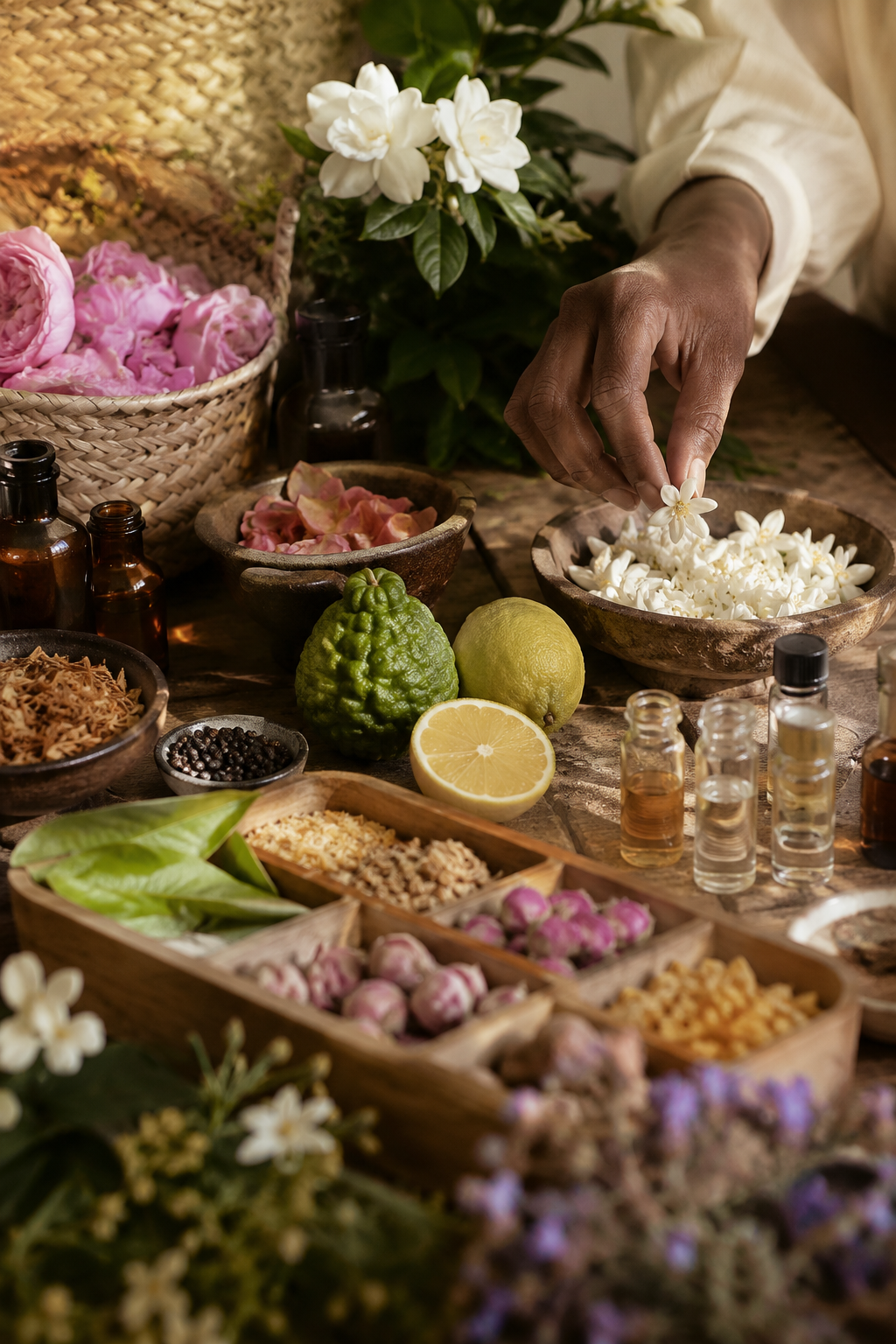
The most interesting sourcing conversations happening in independent perfumery right now involve partnerships with small-scale farmers, ethnobotanists, and indigenous communities who bring knowledge that no lab database can replicate. A wild-harvested ambrette seed smells different from a cultivated one. A resin collected by hand from a specific microclimate carries a complexity that shifts a fragrance from competent to unforgettable.
This is exactly why transparency in sourcing matters, not just ethically, but creatively. When a perfumer knows the land a raw material came from, they compose differently. The ingredient stops being a commodity and starts being a collaborator.
The most powerful fragrance ingredients in the world aren't undiscovered. They're just uncredited. And that difference is the entire conversation.
Why this matters for what ends up in your bottle
Sourcing decisions made upstream have a direct effect on what you smell downstream. An ingredient harvested at peak season from a well-tended, ethically managed crop produces a cleaner, more vivid aromatic profile. Cutting corners at the sourcing stage doesn't just affect ethics. It affects quality, and experienced noses can tell.
This is part of why the real cost of luxury fragrance goes so much deeper than a bottle or a brand name. What you're paying for, when the sourcing is done right, is knowledge, relationship, and years of agricultural care that can't be rushed or replicated cheaply.
At MAIR, this philosophy runs through every development decision. Fragrance isn't something that gets assembled from a list. It gets built from intention, and that starts long before any ingredient reaches a perfumer's palette.
The overlooked place, named plainly
It's the communities that live closest to the plants. The farmers who know which harvest window produces the richest yield. The herbalists who've blended these raw materials for wellness and ritual long before they became perfume notes. The ecosystems that haven't been stripped for scale yet, and the people protecting them.
These are the most overlooked sources of perfume ingredients in the world. Not because they're hidden. Because the industry hasn't prioritized listening.
Fragrance, at its best, is an act of attention. Wearing it, making it, sourcing it. The women who reach for a scent with intention already understand something that most of the industry is still catching up to: identity isn't assembled, it's cultivated. Just like the rarest ingredients worth wearing.
Not sure which MAIR fragrance is yours? The quiz takes 60 seconds.