Best Perfumes to Layer Right Now, According to Fragrance Enthusiasts
The people who actually know how to stack perfumes share their layering logic, and it starts here.
Perfume stacking isn't a trend anymore. It's a skill set. The Fragrantica club threads and PerfumeTok corners that have been dissecting layering combinations for years have officially hit mainstream consciousness, and the people who've been doing this seriously are watching the rest of the world catch up.
The short version: wearing a single fragrance from pulse point to pulse point is fine. Layering two or three intentionally chosen scents to build something entirely your own is a different discipline. It takes understanding what each fragrance does structurally, not just how it smells on the card.
Start with what the fragrance community calls an anchor. This is the base-heavy scent you apply first, something with staying power rooted in musks, woods, or resins. It's the foundation everything else rests on. Get the anchor wrong and no amount of clever topping will save the combination.
Not sure which MAIR fragrance is yours? The quiz takes 60 seconds.
The reason most layering attempts fall flat isn't poor taste. It's poor sequencing. Layering works best when you apply heaviest to lightest, letting each layer find its place before you add the next. Spray the anchor, wait two full minutes, then build upward.
Which MAIR scents actually anchor a stack
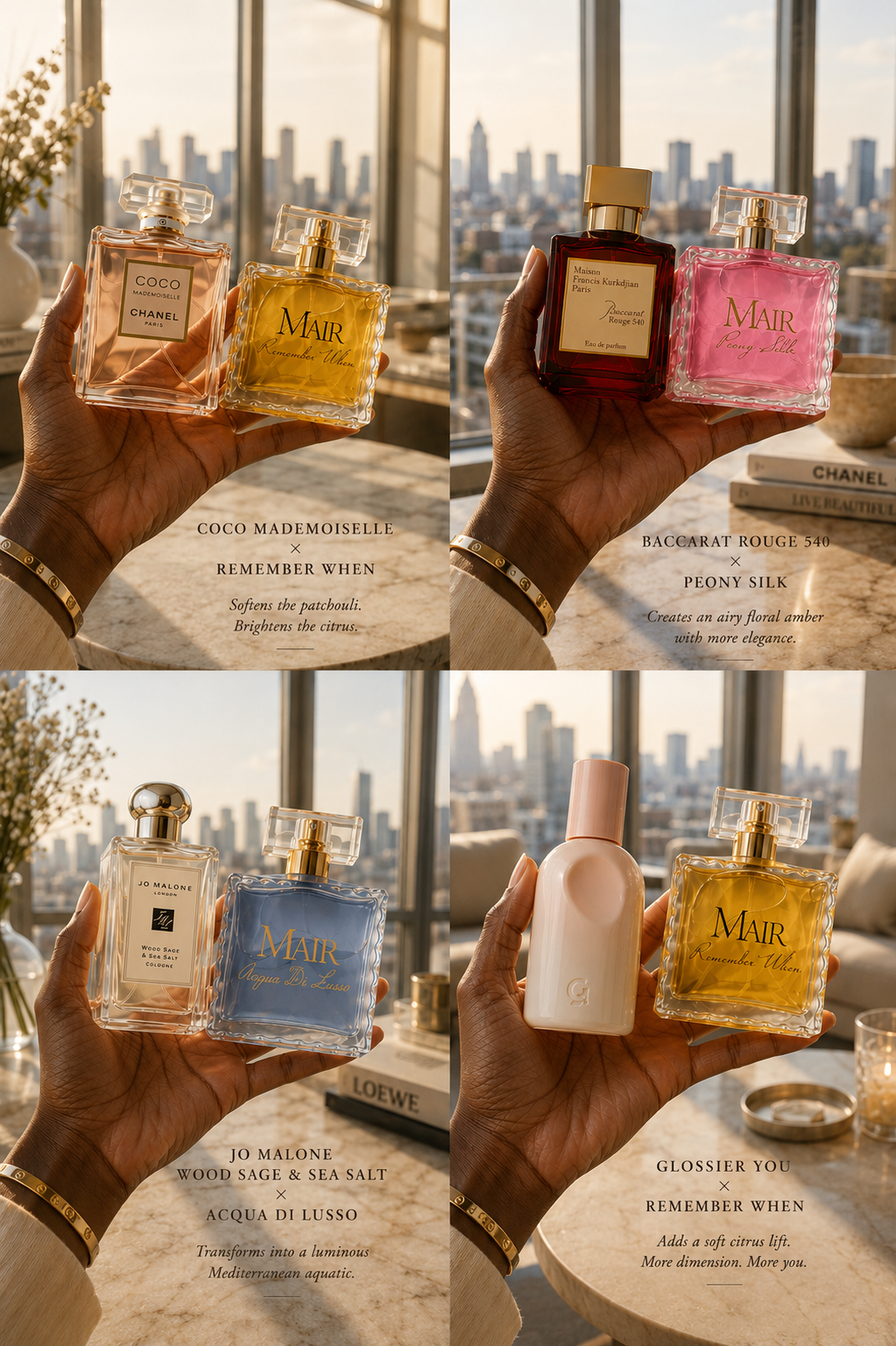
Acqua Di Lusso is the anchor people keep coming back to. Its white musk base and aquatic marine heart create a clean, skin-close foundation that doesn't compete with whatever you place on top. It reads almost like a second skin, which means bolder florals or sharper citrus notes have room to open properly above it.
The pairing logic here is direct. Stack Acqua Di Lusso with a single-note neroli or a bright yuzu-forward fragrance on top. The aquatic base extends the citrus longevity, pulling it from a fleeting top note into something that genuinely lasts through the afternoon.
Remember When works differently. It's richer, warmer, built around a gourmand-adjacent vanilla and sandalwood structure that already has depth. It doesn't need much on top, which makes it the right anchor for someone who wants complexity without layering more than two pieces. A clean green tea note or fresh fig floated over Remember When reads more sophisticated than either scent could manage alone.

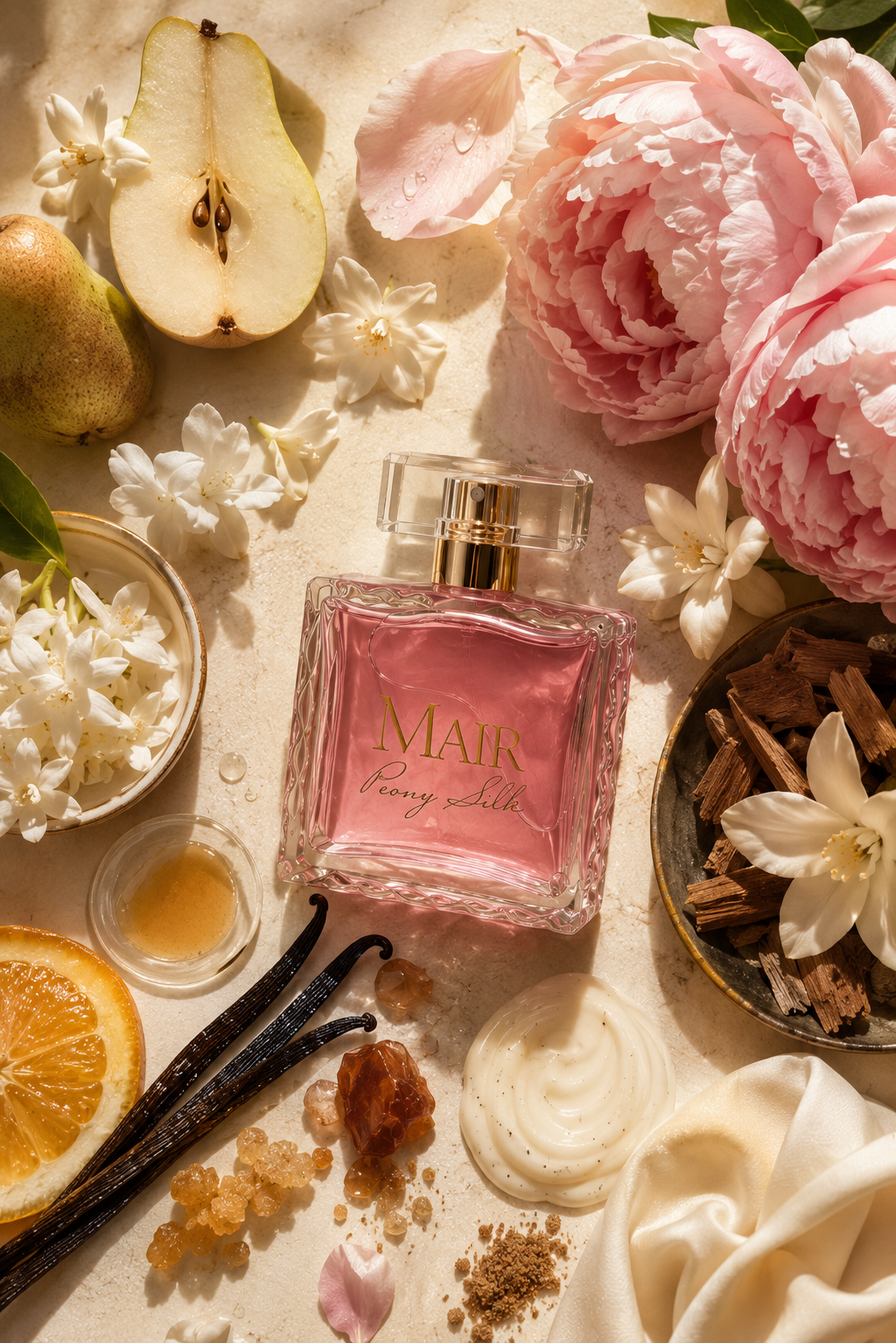
Peony Silk sits in an interesting middle position. It can function as an anchor for light, sheer layers, or as the second-layer bloom over a musky base. Its peony and soft rose heart is airy enough to let woody bases breathe beneath it, but grounded enough to carry a sheer aquatic floated on top. That flexibility is genuinely rare in a floral.
One concrete combination the community keeps recommending: Acqua Di Lusso on the body, Peony Silk on the pulse points, and a single spritz of a green or herbal note at the collarbone. Bergamot resets your nose in about 90 seconds and creates separation between layers, making each component register distinctly rather than muddying into one blurred cloud.
A signature scent isn't found. It's built. Layering is just the honest acknowledgment that you're more complex than any single formula.
The rules the serious stackers actually follow
Don't layer more than three fragrances at once. The nose stops being able to distinguish individual components past that point, and the skin reads it as noise. Two is usually the sweet spot. Three is a considered decision, not a default.
Skin chemistry changes everything. Your skin's pH actively shapes how fragrance molecules behave, which means a combination that reads perfectly on someone else might read differently on you. Test on your skin, not the air, and give it twenty minutes before you decide.
Concentration matters too. Layering two Eau de Parfums creates a different dynamic than pairing an EDP with a body oil or lotion. Fragrance oils and body creams extend longevity without amplifying sillage, which is often exactly what layering calls for. Loud isn't the goal. Dimension is.
The MAIR Discovery Kit exists precisely for this. Testing three scents on your own skin over a few days gives you the material to start understanding how they interact, where one ends and another begins, and which combination reads like it was made for you. Because eventually, one will.
Fragrance as identity isn't a marketing phrase. It's a real practice. The women who layer intentionally aren't chasing complexity for its own sake. They're building a scent that reflects inner power, that shifts with mood and context and season, that can't be bought off any single shelf. That's the whole point. That's always been the point.
Not sure which MAIR fragrance is yours? The quiz takes 60 seconds.