Natural vs. Synthetic Fragrances: Why the Debate Is Back and More Personal Than Ever
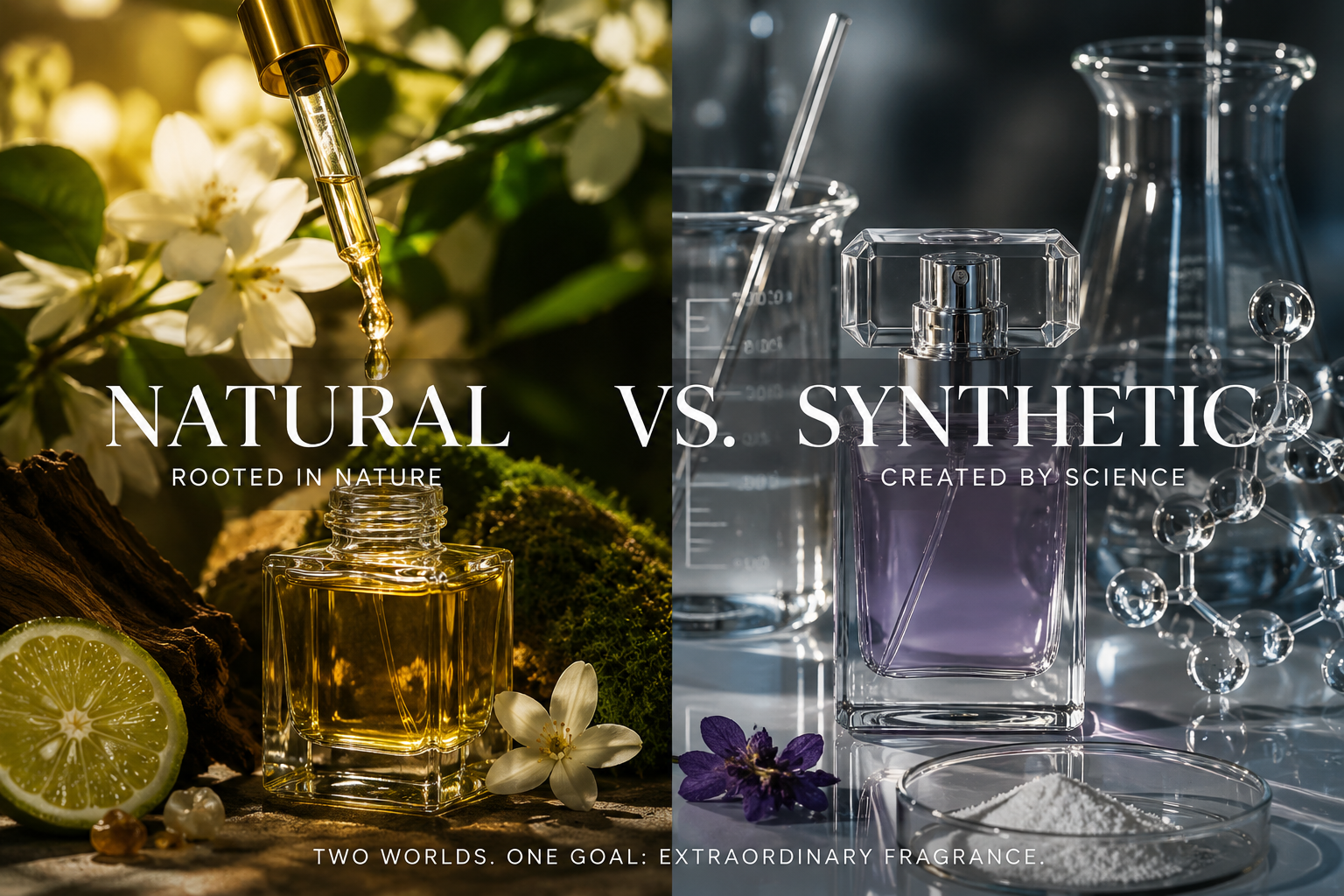
The naturals vs. synthetics debate is louder than ever, and the science is more nuanced than either side admits
The fragrance community has decided synthetic molecules are the villain. Forums are filling up with harm-reduction arguments, calls for "clean" formulations, and a growing conviction that natural equals safe and synthetic equals suspect. The science disagrees, and it's worth understanding why.
This debate matters to anyone who wears fragrance daily. Not because your perfume is secretly dangerous, but because the misinformation spreading through enthusiast spaces is starting to shape purchasing decisions in ways that aren't grounded in chemistry, toxicology, or environmental reality.
Not sure which MAIR fragrance is yours? The quiz takes 60 seconds.
Let's start with the foundational problem: natural and synthetic aren't opposites on a safety spectrum. They're just different production pathways. Benzene is natural. So is ricin. Meanwhile, synthetic linalool , one of the most widely used aroma molecules in perfumery , is structurally identical to the linalool extracted from lavender. Your skin doesn't know the difference. Your immune system doesn't either.
What "Natural" Actually Means in a Bottle
When a perfumer sources natural materials, they're working with extraordinarily complex raw inputs. A single rose absolute can contain over 300 individual chemical compounds, many of which are also synthesised in labs for use in other fragrances. The process of getting from raw ingredient to finished bottle involves extraction, concentration, and preservation steps that change a material's original composition significantly.
Natural doesn't mean unprocessed. It doesn't mean allergen-free, either. Oak moss, a prized natural ingredient with a deep, earthy presence, is now heavily restricted in fine fragrance because it's a documented allergen. The IFRA, the International Fragrance Association, exists specifically because natural materials triggered the skin reactions that forced the industry to regulate.
The community pushing hardest against synthetics often doesn't account for this. Oak moss reactions are real. Cinnamon bark at high concentrations causes sensitisation. Peru balsam is restricted across the board. These aren't synthetic molecules. They're the naturals the movement wants more of.
The Sustainability Argument Cuts Both Ways
Here's where the naturals debate gets genuinely complicated: the environmental cost of scaling natural ingredient sourcing is not small. Sandalwood from Mysore required decades of reforestation efforts after demand nearly eliminated the species. Oud, genuine oud from infected aquilaria trees, is critically endangered in multiple regions. The jasmine growers of Grasse are extraordinary custodians of their land, but they represent a fragile, labour-intensive supply chain that cannot realistically serve global fragrance demand.
Synthetic musks, ambroxan derived from clary sage, hedione from methyl jasmonate , these molecules exist partly because the natural alternatives would require unsustainable land use, exploitation of growers, or the harvesting of protected species. When a perfumer chooses a lab-built sandalwood molecule, that's often a conservation decision, not a corner-cutting one.

The most forward-thinking perfumers today aren't choosing between natural and synthetic. They're asking which combination of materials tells the most honest story about origin, longevity, and intention. Safety data guides what stays in the formula. Sustainability shapes what the perfumer reaches for first.
Understanding how your skin chemistry interacts with fragrance ingredients is far more useful than sorting your perfume collection into "natural good, synthetic bad" piles. The same molecule behaves differently on different skin. pH, hydration, temperature, even diet, all of it shapes how a fragrance sits and develops. That's the science worth knowing.
The safest fragrance isn't the one with the most natural ingredients. It's the one built by a perfumer who understands both what a molecule does and what it costs the world to make it.
Why the Binary Is the Real Problem
The naturals vs. synthetics war keeps winning clicks because it maps onto a broader cultural anxiety about what we put on our bodies. That anxiety is legitimate. But fragrance is not skincare, and the ingredient logic doesn't transfer cleanly. A molecule at 0.2% concentration in an eau de parfum carries a different risk profile than that same molecule in a leave-on moisturiser applied twice daily.
Context is everything in toxicology. Dose matters. Frequency matters. Formulation matters. The harm-reduction instinct driving this debate is worth respecting, but it deserves better information than "synthetic bad" influencer content and forum posts that conflate "I don't recognise this word" with "this is dangerous."
At MAIR, formulation choices come from a place of genuine respect for both material provenance and the person wearing the fragrance. Whether a note is synthesised or extracted, what matters is that it's there because it earns its place in the composition. Fragrance is identity. It's the thing you reach for on days when you need to feel like yourself. That deserves more than a fear-based framework.
Wear what moves you, understand what's in it. Don't let a false binary make those decisions for you.
Not sure which MAIR fragrance is yours? The quiz takes 60 seconds.