Gasoline and Latex: Why Perfume's Ugliest Trend Is Its Most Honest
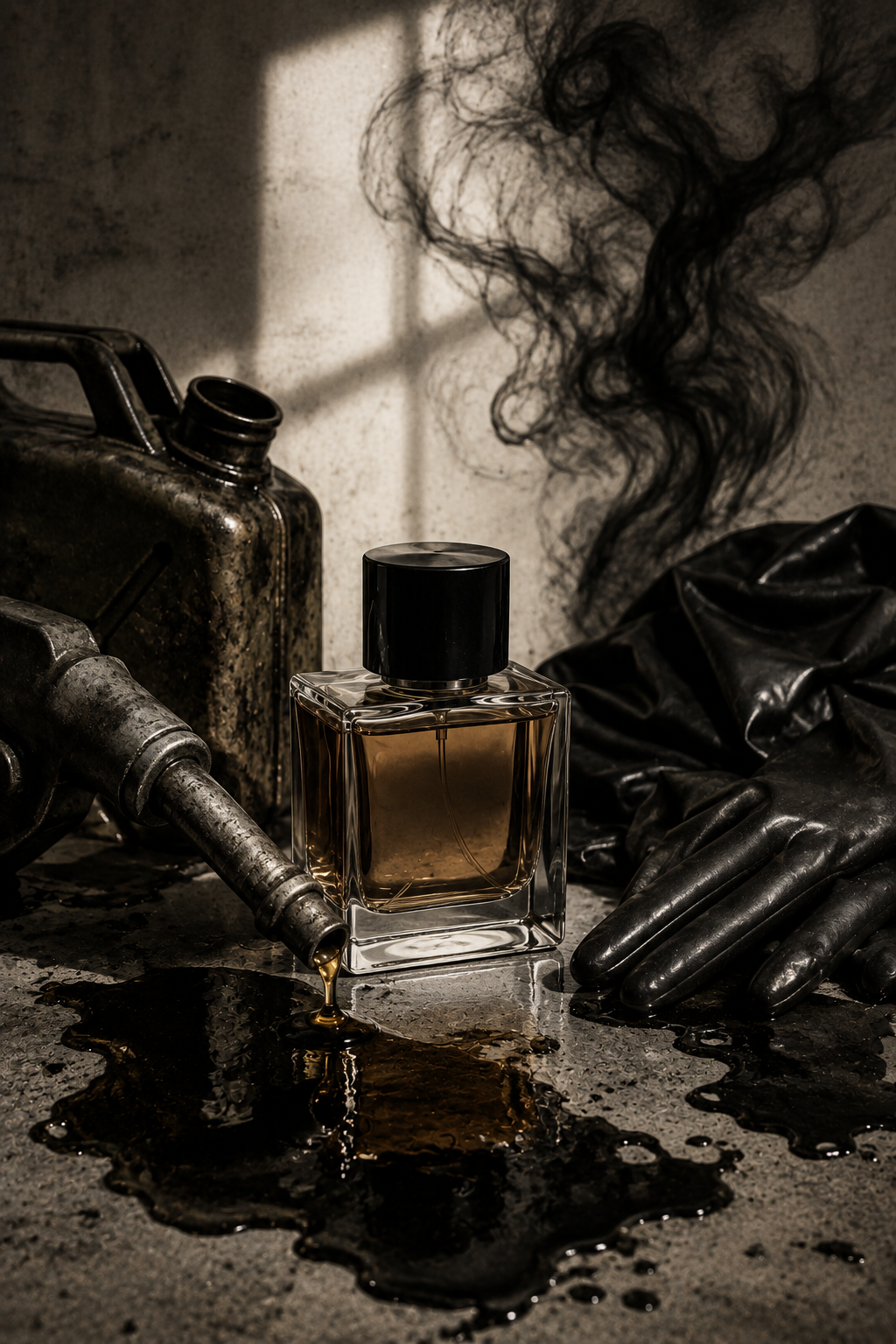
Gasoline, rubber, latex: the internet's obsession with ugly scents is rewriting the rules of what perfume is allowed to be.
The most upvoted fragrance threads on the internet right now aren't about roses, oud, or skin-scent musks. They're about gasoline, latex, and the exact smell of a hospital corridor at 6 am, and the people posting in those threads aren't joking.
Something is shifting in fragrance culture, and it's more significant than a passing aesthetic trend. A generation raised on the idea that beauty smells like fresh laundry and dewy petals is actively rejecting that premise, chasing the weird, the industrial, and the clinically sterile instead. They're calling it honest.
The question worth asking is: honest about what, exactly?
Not sure which MAIR fragrance is yours? The quiz takes 60 seconds.
Why "Pretty" Started Feeling Like a Lie
Fragrance has spent decades selling aspirational softness. The brief was almost always the same: appealing, approachable, safe. The result was a market saturated with compositions designed to offend no one, pleasant but rarely memorable.
Memory is the whole point of scent. Your olfactory system connects directly to the hippocampus and amygdala, bypassing the rational brain entirely, which is why a whiff of rubber or motor oil can land harder than the most carefully constructed floral. It's not about sophistication. It's about truth: the brain recognizes the real before it recognizes the pretty.
The fragrance community noticed this shift first. When enthusiasts started turning away from designer houses, it wasn't only about pricing or exclusivity. It was about feeling patronized by compositions that assumed they wanted to smell inoffensive, when what they actually wanted was to smell like something.
Petrichor. Pencil shavings. Warm electrical wiring after a thunderstorm. These are the notes appearing in increasingly serious fragrance conversations, and the perfumers pursuing them are working at the edge of what the industry considers acceptable.
The Chemistry Behind the Uncomfortable
This isn't arbitrary. The molecules that create these industrial, medicinal, or rubbery impressions are genuinely complex to work with. Calone delivers a cold, almost clinical aquatic quality. Cashmeran can tip into something nearly plastic. Certain musks sit right at the boundary between skin and synthetic, and getting them to behave within a composition takes real technical skill.
Understanding how perfume is actually made reframes why these accords are so difficult. Raw materials don't arrive smelling like a finished fragrance, they arrive smelling like their source. Indole, the molecule responsible for jasmine's white-flower richness, smells like decay at high concentrations. Civet is animalic to the point of feral. The perfumer's job has always been to walk right up to the uncomfortable and decide exactly how close is too close.

The new generation of fragrance lovers wants to watch that negotiation happen. They don't want the polished result, they want to be in the room where the decision gets made.
That's a fundamentally different relationship with beauty. It's not about smelling good by someone else's definition. It's about smelling intentional.
The most radical thing fragrance can do right now is refuse to be reassuring.
What "Ugly" Fragrance Is Actually Saying
There's a cultural conversation embedded in this trend that goes beyond aesthetics. When someone chooses to wear a scent that references a mechanic's workshop or a sterile surgical suite, they're making a statement about whose experiences count as beautiful. Blue-collar memory, clinical precision, and industrial labor aren't the reference points luxury fragrance historically celebrated.
Wearing them is a reclamation. It says: my life, my references, my kind of beauty.
This connects to something MAIR has always understood. Fragrance isn't decoration, it's a declaration. The compositions worth building are the ones that require the wearer to have a point of view, not just a preference for something inoffensive. The obsession with longevity and sillage has distracted from the more important question: what is this fragrance actually saying?
Gasoline and rubber are saying something. They're saying beauty doesn't owe anyone softness, and that your nose gets to decide what's worth remembering.
Where This Goes Next
The industrial scent movement won't stay underground much longer. It's already influencing mainstream perfumery through the back door, showing up as metallic edges in otherwise conventional compositions, or as a cold opening note that burns off within the first ten minutes but leaves an impression.
The real shift is in who gets to define what fragrance is for. For too long, that definition was handed down. The Fragrantica threads celebrating hospital corridors and workshop floors are a community writing their own brief, and the perfumers paying attention are following.
MAIR was built on the belief that fragrance is an act of inner power made wearable, that it should reflect who you actually are, not who a marketing campaign decided you should be. Whether you reach for something airy and luminous like Acqua Di Lusso or want to understand the full spectrum of what contemporary perfumery can do, the starting point is always the same: intention. Know what you're saying before you spray.
Pretty is optional. Honest is not.
Not sure which MAIR fragrance is yours? The quiz takes 60 seconds.