Why ‘Intense,’ ‘Elixir,’ and ‘Le Parfum’ Fragrances Are Killing Perfume Creativity
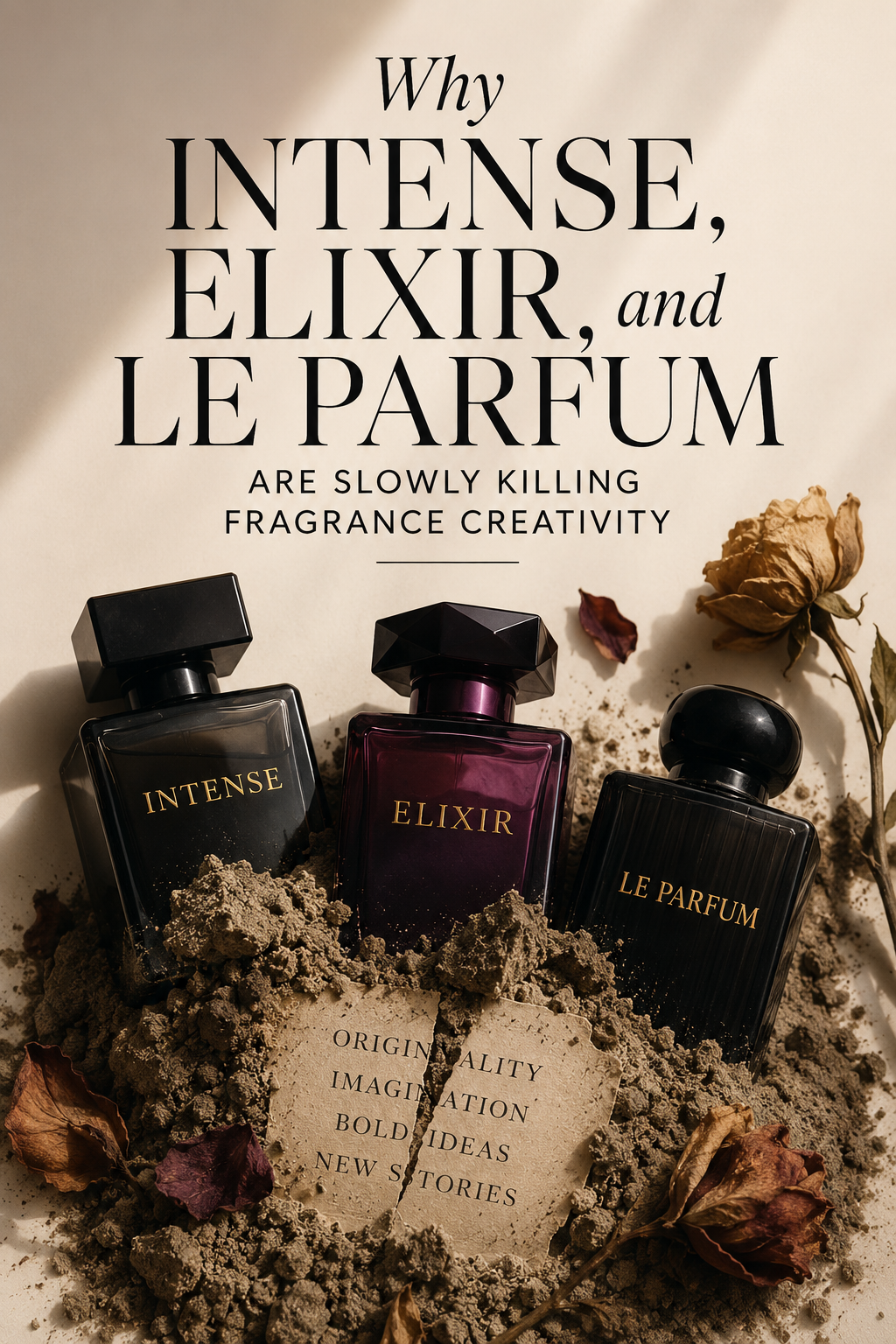
The fragrance industry's laziest trend has a name, and the community is finally done with it.
Every few months, a beloved fragrance gets a sibling. It arrives wearing a new suffix , "Intense," "Elixir," "Le Parfum," "Noir," "Absolu" , and it promises depth, evolution, darkness, complexity. What it usually delivers is the original, turned up louder and charged at a higher price. The perfume community has noticed. And it's exhausted.
Flanker fatigue is the quiet crisis sitting at the centre of mainstream fragrance right now. It's not a niche complaint from hardcore collectors. It's a widespread feeling that the industry has started to mistake variation for creativity and renaming for reinvention.
What a flanker actually is , and what it's become
A flanker starts as a legitimate creative idea. You build on a successful fragrance's DNA, shift the balance of a dominant note, deepen a base, or explore a seasonal contrast. Done well, it expands a universe. Done lazily, it dilutes one.
The problem isn't flankers as a concept. The problem is that "Intense" has become shorthand for "we added more oud and raised the price by thirty percent." "Elixir" signals that the original now comes in an amber bottle with a thicker concentration and a vague promise of mystery. "Le Parfum" means the marketing budget went up but the brief didn't change.
Not sure which MAIR fragrance is yours? The quiz takes 60 seconds.
Fragrance lovers can smell the difference between intention and iteration. When a new release carries a recycled skeleton with a fresh coat of labdanum, the community documents it. Forums, reviews, social threads. The receipts exist.
And to understand why this pattern has become so pervasive, it helps to look at what's actually driving it. The reasons the fragrance community lost faith in designer houses come down to this: creative risk is expensive, and reformulation is cheaper than reinvention. A flanker leverages existing brand equity while minimising development cost. It makes commercial sense. It just doesn't make good perfumery.
The Naming Convention Is the Confession
There's something worth paying attention to in the language itself. Words like "Intense," "Elixir," and "Noir" aren't fragrance descriptions. They're mood prompts. They tell you how to feel before you even lift the cap.
That's not storytelling. That's pre-programming. And it's the opposite of what great fragrance does, which is arrive without instruction and let you find your own response to it.
When a name has to do all the atmospheric heavy lifting, it's usually because the juice can't. A fragrance that genuinely surprises you doesn't need "Absolu" in the title. It earns the feeling itself.

The real cost of this trend isn't just commercial cynicism. It's the erosion of trust. Fragrance buyers, especially those who've spent time learning what they love, have started approaching new launches with scepticism rather than curiosity. That's a cultural shift worth taking seriously. The sillage obsession and the longevity lie sit in the same family of problems. When marketing metrics drive creative decisions, something irreplaceable gets lost.
Independent brands don't have the infrastructure to play the flanker game at scale. That's not a limitation. It's a discipline. When you're building a fragrance from a genuine brief, investing in real raw materials, and carrying the full creative responsibility yourself, you don't arrive at "Intense II" as an option. You arrive at something new.
A fragrance that genuinely surprises you doesn't need a suffix to justify its existence. It earns its place the moment it hits skin.
Where Genuine Creativity Actually Lives
The fragrance community hasn't lost its appetite for novelty. It's lost its patience for the simulation of novelty. Those are different things, and the distinction matters.
Collectors and casual buyers alike are seeking out independent houses precisely because they offer something the flanker model structurally cannot: a fragrance built around a singular vision rather than a proven commercial template. Understanding how perfume is actually made makes this clearer. Real creative development takes time, iteration, and access to quality raw ingredients. You can't shortcut it with a new bottle shape and a one-word modifier.
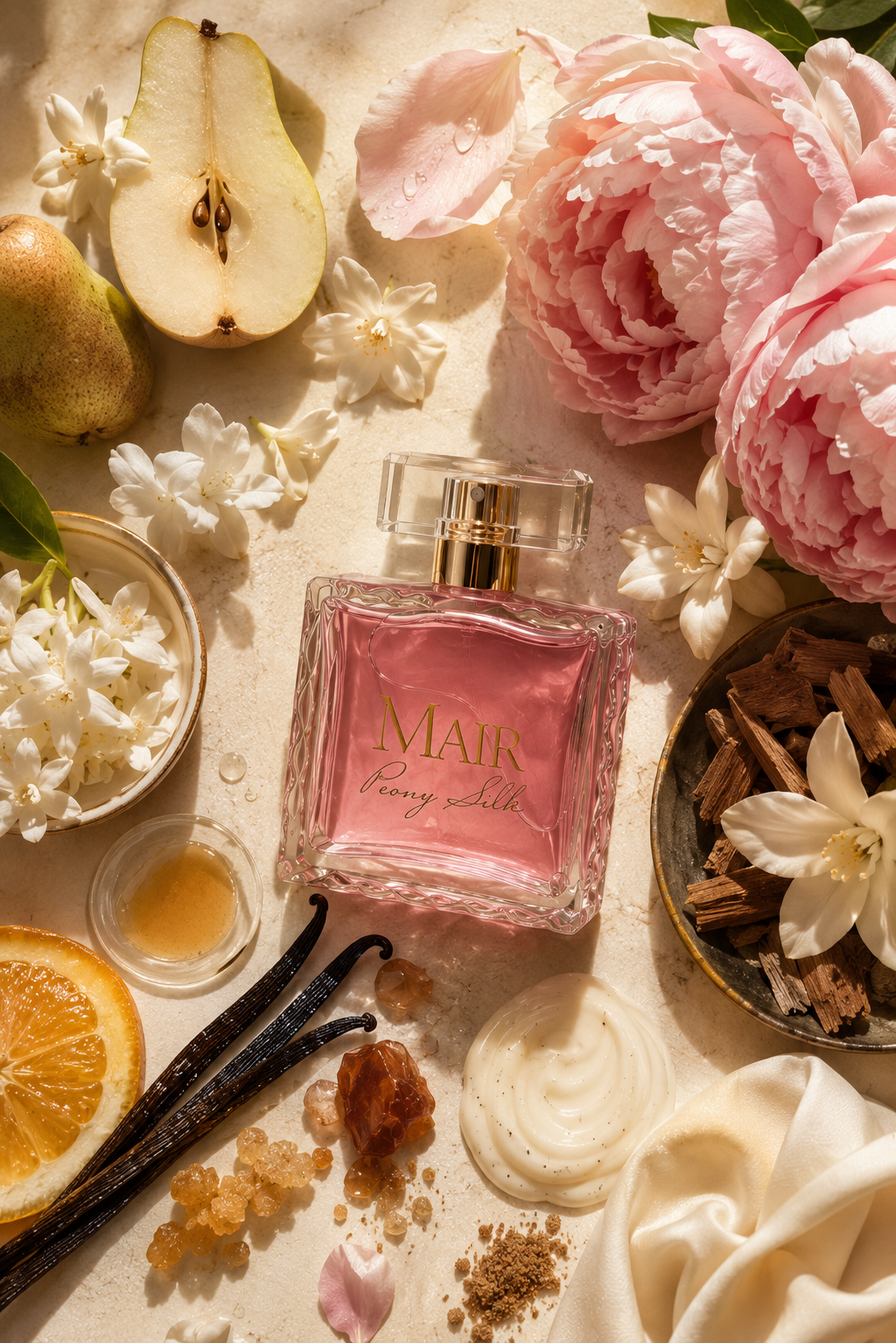
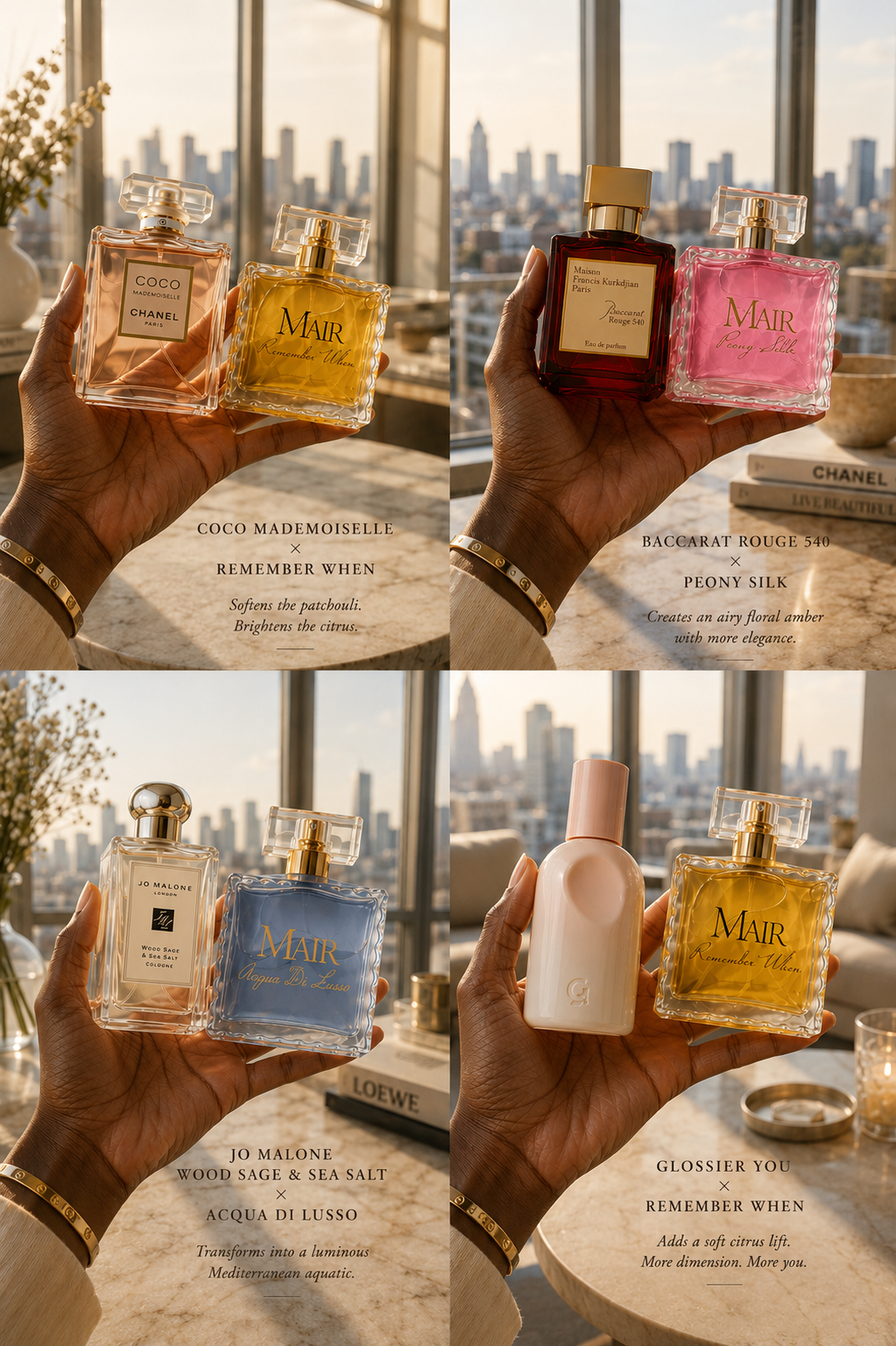
At MAIR, every fragrance starts with a feeling that doesn't yet have a name. Remember When was built around the specific texture of a memory, not a trend forecast. Peony Silk came from the idea of softness as strength, not softness as passivity. Acqua Di Lusso was designed to feel like clean confidence rather than clean simplicity. None of those ideas fit in a suffix.
Flanker fatigue is ultimately a message. The community is telling the industry that it wants to be surprised again. It wants fragrance that asks something of it, rather than telling it exactly how to feel before the bottle is even opened.
Fragrance at its best isn't a remix of something familiar. It's a new conversation. And the women who wear MAIR understand that the most powerful thing a scent can do is reflect who you already are, not who a marketing deck decided you should be.
Not sure which MAIR fragrance is yours? The quiz takes 60 seconds.