The Best Perfumes for Women Who Don't Want to Smell Like Everyone at the Office

Smelling distinct isn't luck. It's a decision , and the right fragrance makes it effortless.
The most powerful perfumes for women aren't the ones everyone recognizes. They're the ones nobody can quite place but nobody can forget. That distinction is intentional, and it starts with choosing differently.
There's a quiet epidemic happening in office buildings, conference rooms, and elevators worldwide. Three women walk past and they're all wearing the same thing. Not because they planned it. Because mass fragrance distribution, algorithmic marketing, and "safe" gift-giving have funneled an enormous number of women into the same olfactory lane. Smelling like everyone else isn't a style failure. It's a system working exactly as designed.
The women who want out of that system need a different approach entirely.
Not sure which MAIR fragrance is yours? The quiz takes 60 seconds.
Why Most Bestseller Lists Won't Help You Stand Out
Bestseller rankings exist to move volume. They tell you what's popular, which by definition means what most people are already wearing. If olfactory distinction is the goal, a bestseller list is the wrong map.
What actually creates a signature scent is a combination of composition, concentration, and skin chemistry. A fragrance built on rare ingredients, handled with real craft, will always perform differently from one engineered for mass appeal. The cost behind a luxury fragrance tells you something important about what's actually inside the bottle , and why two perfumes at opposite ends of the price spectrum smell so fundamentally different after two hours on skin.
The other factor most guides skip entirely: concentration. An Eau de Parfum with a high-quality base will evolve through three distinct phases across a day. That evolution is where a scent becomes personal. It stops being a product and starts being yours.
The Note Families That Actually Read as Distinctive
Certain fragrance families have been so heavily saturated by commercial releases that they've lost their ability to surprise. Sweet gourmands with vanilla and praline. Light florals built almost entirely on synthetic musk. Citrus freshs that evaporate before you've left the building. These aren't bad fragrance families. They've just been overexposed.
The note families doing the real work for women who want to smell singular right now are more complex. Chypre structures anchored in oakmoss and labdanum. Green florals that pair something luminous like peony with something earthy underneath. Aquatic compositions that go beyond the predictable and land somewhere genuinely mineral and cool. White floral soliflores built on real jasmine, not the synthetic shorthand that most commercial releases use.
Jasmine sourced from Grasse smells categorically different from lab-replicated jasmine. The families who grow and harvest it have spent generations understanding exactly why. That difference registers immediately on skin, and it's one of the clearest ways a fragrance signals genuine craft to anyone close enough to notice.

Skin chemistry compounds every choice you make. A fragrance that reads as a warm amber on one woman turns powdery and flat on another. Your skin's pH actively shapes how a perfume develops across its wear, which is why testing on skin before committing is non-negotiable. What smells stunning in the bottle might not be what your body amplifies.
This is also where layering becomes a serious tool rather than a trend. Two well-chosen fragrances worn together create a third scent that belongs entirely to you. Nobody is going to replicate that combination, because nobody has your skin, your ratio, your sequence. Layering done properly is one of the most underused paths to a truly signature scent.
A signature scent isn't something you find on a bestseller list. It's something you build by knowing exactly who you are and refusing to smell like anyone else.
What to Actually Look For When You're Shopping
Skip the celebrity endorsement; just ignore the bottle. Flip to the ingredient list and look for raw materials with real provenance. Words like Grasse, absolute, resin, oud, and natural isolate are signals that a perfumer made real decisions about what goes inside.
Concentration matters, too; an Extrait de Parfum carries a higher percentage of fragrance oil, which means more depth, more longevity, and a slower, richer evolution across the day. It also means you use less. A single well-placed application at the pulse points on the wrists and the base of the throat is enough.
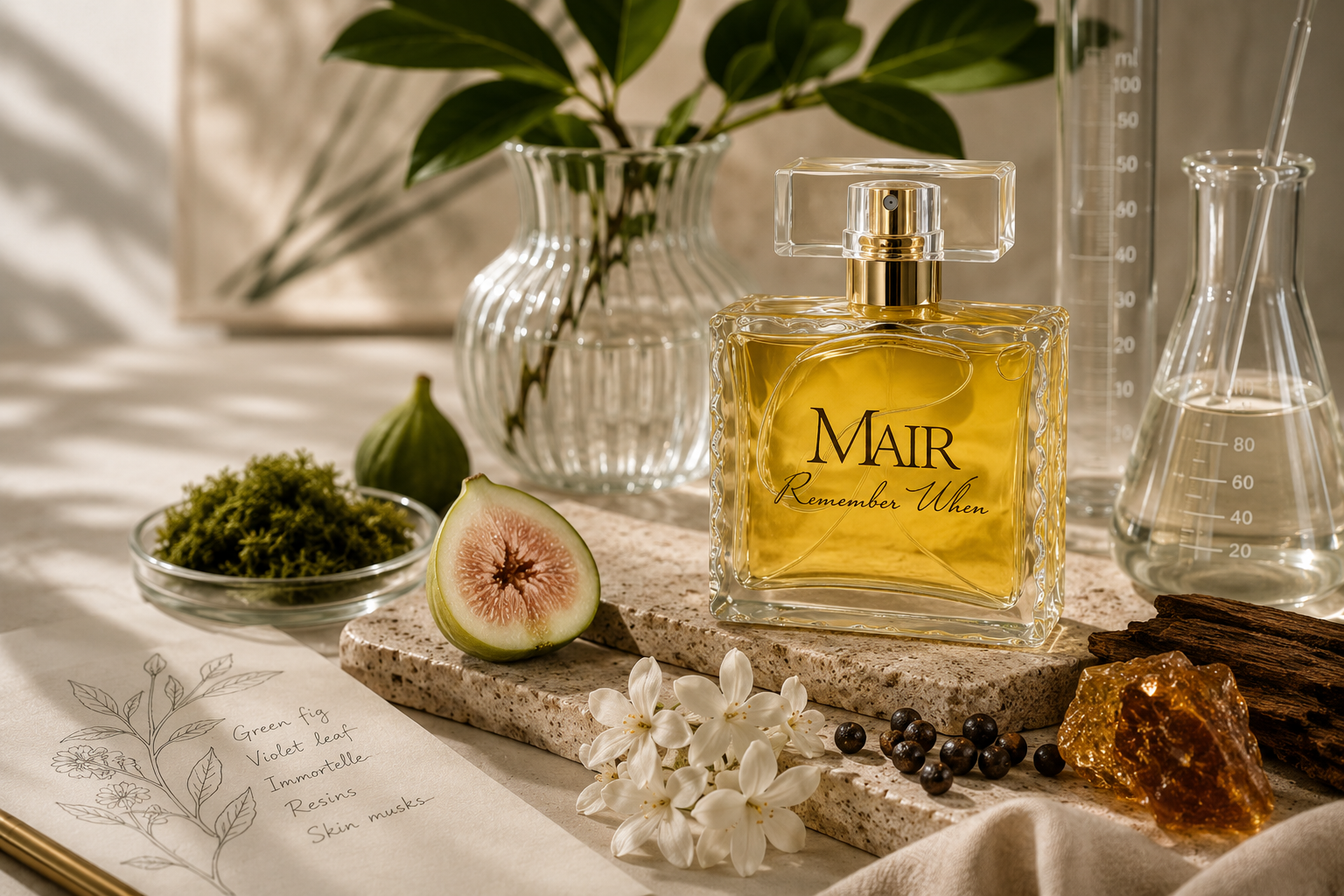
MAIR's Remember When is a strong entry point for anyone tired of the familiar. It opens with something bright and almost nostalgic, then settles into a warmer, more complex drydown that doesn't behave the way most florals do. Peony Silk takes a different approach: luminous on the surface, quietly anchored underneath. Neither of them is trying to be inoffensive. That's the whole point.
Fragrance as a Statement of Self
Wearing a distinctive perfume isn't vanity. It's clarity. It says that you've considered how you move through the world and you've made a choice about the impression you leave before anyone has heard your voice.
The women who understand fragrance at this level aren't chasing trends. They're building something more durable: an olfactory identity that's consistent, personal, and entirely their own. That's what MAIR was built to support. Not the fragrance you wear when you want to fit in. The one you reach for when you're done apologizing for taking up space.
Smelling like yourself, fully, is one of the most quietly radical things a woman can do.
Not sure which MAIR fragrance is yours? The quiz takes 60 seconds.