What Your Perfume Says About You: The Psychology of Fragrance

Your scent isn't just a preference, it's a psychological fingerprint hiding in plain sight.
Fragrance is one of the few choices you make every morning that broadcasts something true about you before you say a single word. The psychology of perfume isn't soft science. It's rooted in how your brain encodes memory, emotion, and identity, and why scent bypasses rational thought faster than almost any other sensory signal.
Most people think they choose a perfume because they like how it smells. But research consistently shows the opposite is closer to the truth. You're drawn to scents that mirror where you already are emotionally, or where you want to arrive.
Not sure which MAIR fragrance is yours? The quiz takes 60 seconds.
That distinction matters. Because it means your fragrance wardrobe isn't accidental. It's autobiographical.
What Your Fragrance Family Actually Reveals
Floral lovers tend to be romantics, yes, but more specifically, they're people who use beauty as a form of order. A well-crafted peony or rose accord isn't soft, it's structured. Choosing it says something about how you navigate the world: with intention dressed as elegance.
Musks and ambers draw people who want to disappear into a scent rather than announce themselves with one. These are often the most emotionally confident wearers in the room. They understand that the quietest statement can be the loudest one.
Citrus lovers, particularly bergamot and neroli, are almost always decisive thinkers. Clean, bright, immediate. They want their fragrance the way they want their decisions: clear and without excessive negotiation. Bergamot in particular resets your nose in about 90 seconds, which is why so many perfumers use it as a palate-clarifying top note. It's no coincidence that people drawn to this family tend to be the same ones who reset quickly after conflict.
Woody and earthy fragrances draw a different kind of wearer entirely. Vetiver, oud, patchouli, and sandalwood signal someone who's comfortable with depth, with complexity, with things that take time to unfold. If your signature scent is a woody oriental, you're probably someone who makes decisions slowly and stands by them completely.

The Memory Loop: Why Scent Is Never Just Scent
The olfactory bulb connects directly to the amygdala and hippocampus, the brain's centers for emotion and memory. No other sense has that kind of direct access. Sound, sight, touch, all of them route through the thalamus first. Smell doesn't wait. It arrives. That's why a single note can collapse a decade of distance in an instant.
This is why choosing a signature fragrance is genuinely significant. You're not just selecting a pleasant smell. You're building a neurological anchor. Every time you wear it, you're reinforcing how you feel in it, and how others feel around you. That scent becomes part of how your identity is stored, both in your memory and in theirs.
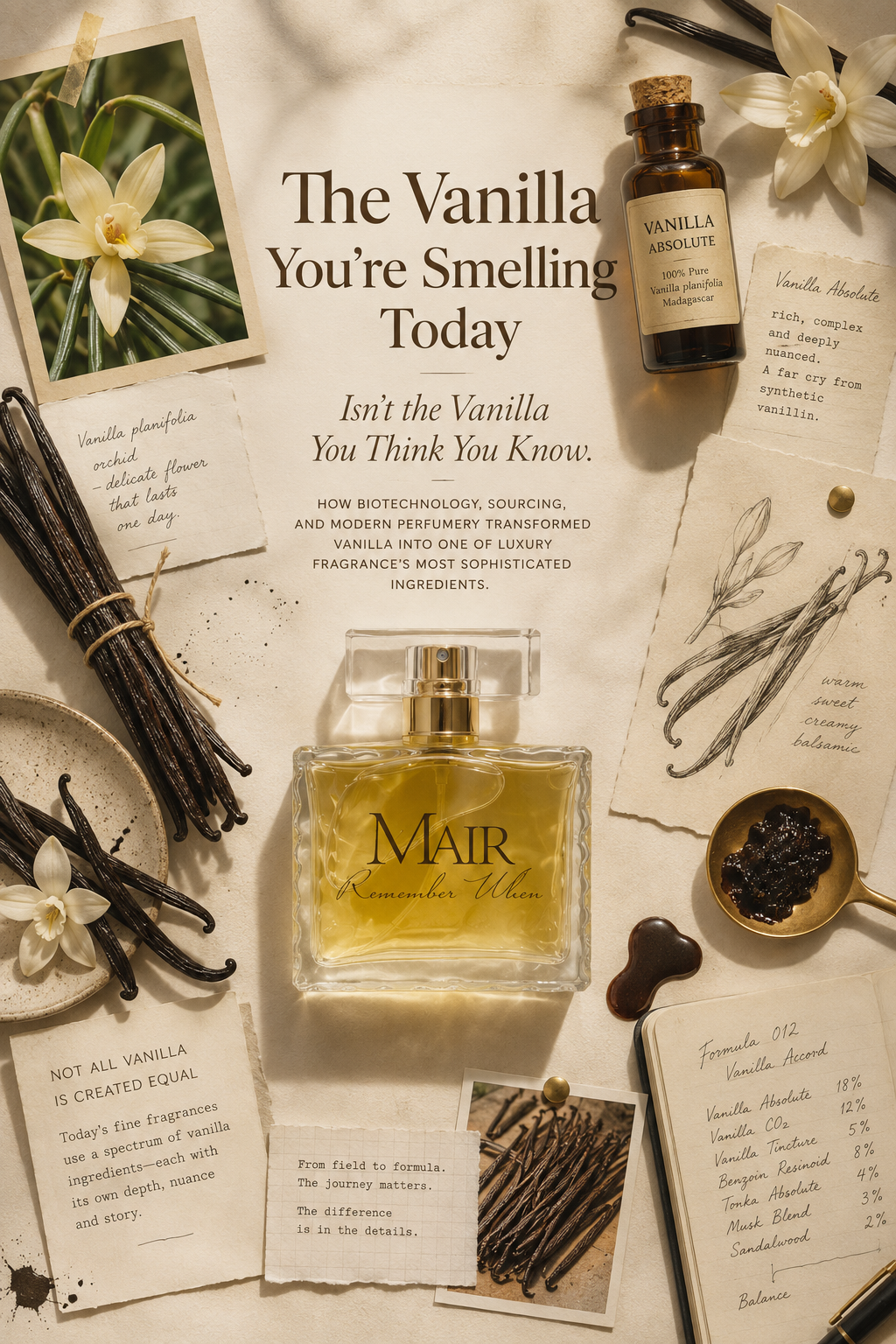
At MAIR, this is the thinking behind every formula. Mair has spoken directly about designing scents that feel like emotional coordinates, not just beautiful compositions. Remember When was built around exactly this premise: the specific ache of a memory so vivid it lives in your chest, not just your mind.
The fragrance you reach for without thinking is the most honest thing in your wardrobe. It knows what you need before you do.
Your Skin Changes the Story
The same perfume smells genuinely different on different people. This isn't myth or marketing. Your skin's pH level, moisture content, and natural chemistry all interact with a fragrance's molecules and shift what rises to the surface. Understanding your skin pH is one of the most underused tools in finding a scent that truly works for you.
Which means the fragrance you love on someone else might not be your signature at all. What you're actually searching for is a formula that your skin co-authors. The best perfumes don't overpower your chemistry. They collaborate with it.
Wearing Fragrance With Intention
The psychology of perfume points to something MAIR has always believed: fragrance isn't decoration. It's definition. The women who wear MAIR aren't choosing a scent to impress a room. They're choosing one to remind themselves who they are when they walk into it.
That kind of intentionality changes how you wear fragrance and what you ask of it. Longevity matters because a scent that fades by noon doesn't hold the same psychological weight as one that stays with you through the whole day. You want a formula strong enough to carry the version of you that you showed up as.
Your perfume says something. It says it every time you enter a room, every time someone catches it in your wake, every time you lift your wrist and remember. The only question worth asking is whether it's saying what you actually mean.
Not sure which MAIR fragrance is yours? The quiz takes 60 seconds.