Why the Vanilla in Today's Luxury Perfumes Smells Different
Vanilla in 2026 is pulling in two directions at once, and perfumers are doing it on purpose
Vanilla is the most recognizable scent on earth, and right now it's being completely reinvented. The same molecule that reads as warm, safe, and familiar is currently pulling off two opposite emotional feats simultaneously, and understanding why changes how you'll shop for fragrance forever.
Vanillin, the primary aromatic compound responsible for that iconic sweet warmth, is a single molecule. But perfumers in 2025 and 2026 are treating it less like a base note anchor and more like a raw material with a full spectrum of possibility. The results smell nothing like each other.
Not sure which MAIR fragrance is yours? The quiz takes 60 seconds.
On one end, you have the dark extraction school. Perfumers are pairing vanillin with labdanum, aged benzoin, and heavy balsamic resins to create something that smells closer to liqueur than dessert. Rich, slightly fermented, almost medicinal in the best way. This is vanilla as ritual object, not comfort blanket.
On the other end, a completely different technique is producing what fragrance insiders are calling skin vanilla. Here, vanillin gets diluted into musks so transparent they barely register as a note at all. The effect is addictive precisely because it's elusive. It smells like someone's actual skin on their best day. Nothing more, nothing familiar.
Why the Same Molecule Reads So Differently
The technical answer lives in concentration and context. Vanillin at high concentrations activates a heavy, almost resinous quality. Vanillin at low concentrations, especially when surrounded by clean musks and skin-mimicking ingredients like ethylene brassylate, reads as something barely-there and deeply personal.
Perfumers also control directionality through the molecules they pair vanillin with. Coumarin pulls it toward powdery nostalgia. Heliotropin pushes it softer, almost childlike. Woody ambers make it drier and more architectural. This is why two fragrances can both list vanilla on the label and share almost zero emotional DNA.
Temperature matters too. Vanilla is a heat-activated note, which is why it blooms differently on skin depending on your body's natural warmth. That's not marketing. That's thermodynamics. Your skin's pH and temperature are doing active work on every note you wear, and vanilla is one of the most responsive to both variables.

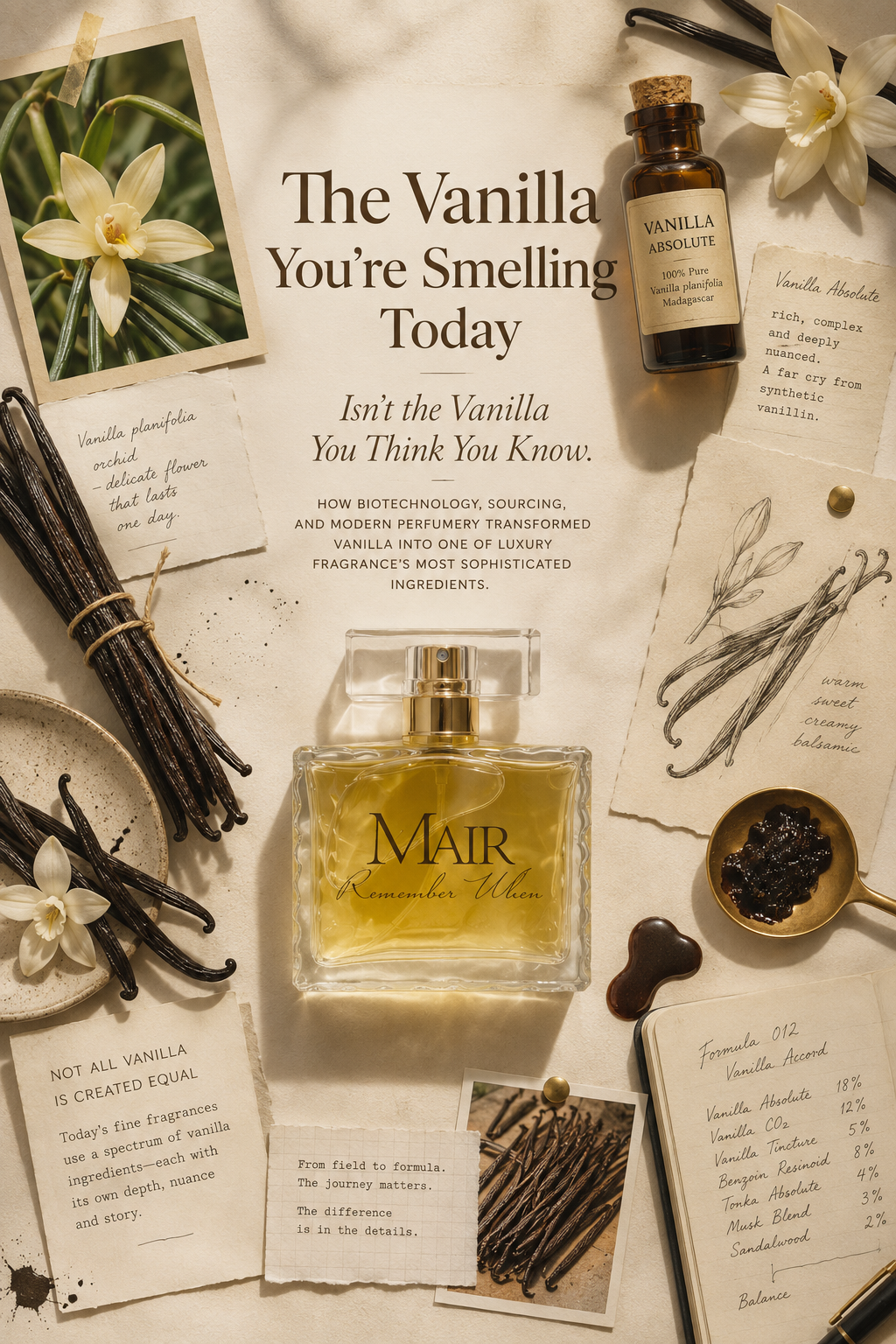
The raw material sourcing also shapes what you actually smell. Vanilla absolute, extracted directly from cured vanilla pods, carries smoky, tobacco-adjacent facets that synthetic vanillin simply doesn't. It's also one of the most labor-intensive extractions in perfumery, which is part of why genuinely complex vanillic fragrances cost what they cost. You're paying for the difference between a note and a real material.
Benzyl benzoate is another tool in this conversation. It's a fixative that perfumers use to extend how long vanillic notes last on skin while simultaneously smoothing out any harsh synthetic edges. It doesn't announce itself. It just makes the vanilla version of itself stay longer and read cleaner.
Vanilla isn't sweet. It's a decision. Every version you smell is a perfumer choosing which truth about comfort they want you to feel.
What This Means When You're Actually Shopping
Stop looking for vanilla. Start asking how a vanilla reads. Is it dry or gourmand? Does it sit close to the skin or project outward? Does it arrive with warmth or coolness? Those questions will tell you more than any note pyramid ever could.
If you want to understand how these raw decisions get made before a fragrance ever reaches your wrist, the full journey from raw material to finished bottle is worth understanding. The technical choices made early in formulation are what you're actually smelling on your skin months later.
Layering is also worth considering here. A skin vanilla worn over a woody amber base will read darker and more resinous. The same skin vanilla over a clean citrus will lift into something almost translucent. The molecule hasn't changed. The context has everything to do with it.
At MAIR, this is exactly the kind of thinking that shaped Remember When. Not sweet. Not retro. Warm in a way that feels earned, not applied. Intentional femininity has always meant understanding what a note actually does before deciding whether you want to wear it.
Vanilla in 2026 isn't one thing. It never was. The women who know that are the ones who wear fragrance like they mean it.
Not sure which MAIR fragrance is yours? The quiz takes 60 seconds.