Why Fragrance Sales Are Booming: Is Perfume the New Lipstick Index?
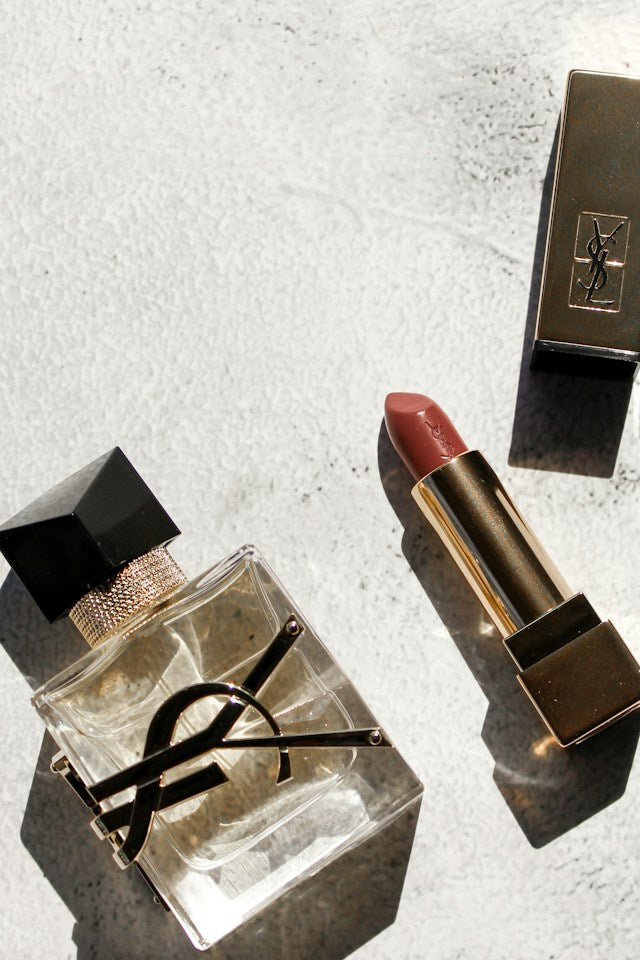
The fragrance index is real, and it explains exactly why your perfume budget survived every spending cut this year.
Lipstick sales spike during recessions. That's been the beauty industry's favorite data point for decades. But a new signal is quietly replacing it, and it smells a lot more interesting.
Circana analyst Larissa Jensen has been tracking what she calls the "Fragrance Index," a pattern that shows fragrance outperforming almost every other beauty category during periods of economic anxiety. When budgets tighten, women stop buying new handbags. They hold off on the holiday wardrobe. But they don't put the perfume down. Not even close.
Fragrance is now the emotional anchor of the luxury beauty market, and understanding why tells us something true about how we're actually coping right now.
Not sure which MAIR fragrance is yours? The quiz takes 60 seconds.
Why Fragrance Survives Every Spending Cut
The economics make sense once you understand what fragrance actually delivers per pound spent. A quality eau de parfum, worn consistently, costs pennies per application. It travels with you. It doesn't expire after one season the way a trend piece does. And unlike a beauty treatment you have to book again in six weeks, it works every single morning without effort.
But the real reason fragrance is recession-proof isn't practical. It's psychological.
Scent is the only sense with a direct line to the limbic system, the part of your brain that processes emotion and memory before your rational mind even gets involved. A single spritz can shift your nervous system before you've finished getting dressed. That's not a marketing claim. That's neuroscience.
When the world feels unstable, people reach for things that make them feel like themselves. Fragrance does that faster and more reliably than almost anything else in your beauty routine. It's why the questions people ask about fragrance have shifted in the last two years. It's no longer just "what smells good?" It's "what makes me feel powerful?" and "what calms me down?"

The Emotional Indulgence Economy
Jensen's Fragrance Index lands at an interesting cultural moment. We're watching a full-scale reorganisation of what counts as a "worth it" purchase. The consumer who once stretched for a designer bag is now deeply suspicious of that kind of spending. Status signalling through obvious logos has lost its grip on a generation that experienced a pandemic, a cost of living crisis, and a collective rethinking of what actually matters.
What's taken its place is what economists are calling the "emotional indulgence economy." Smaller, more frequent purchases that deliver a genuine sensory or emotional payoff. Fragrance sits perfectly at this intersection. It's personal enough to feel like a treat. It's affordable enough to justify. And it works.
There's also something worth noting about invisibility. Fragrance doesn't announce your spending to the room the way a new coat does. It's entirely yours. In a climate where conspicuous consumption has started to feel uncomfortable, that quiet intimacy is increasingly attractive. You're not performing wealth. You're experiencing it.
In a world renegotiating what luxury means, fragrance won because it never needed you to prove anything. It only needed you to feel something.
What the Fragrance Community Already Knew
Analysts are only now catching up to what fragrance devotees have understood for years. The fragrance community, the one that built its own vocabulary, its own review culture, its own hierarchy of appreciation, was never really about status. It was about sensation and identity. And that community grew precisely because it offered something the mainstream beauty market wasn't delivering: genuine connection over corporate gloss.
The notes you choose, the way you layer them, the moment in your routine when you apply them, these are decisions that reflect who you are. Not what you want people to think you are. There's a real difference.
Understanding why quality fragrance costs what it costs also changes how you relate to it. When you know the Bulgarian rose absolute in your bottle took three tonnes of hand-picked petals to produce, a 50ml purchase doesn't feel like an extravagance. It feels like a considered choice. That reframe matters more than ever when every spending decision is under a microscope.
Fragrance as Identity, Not Accessory
At MAIR, this has always been the foundation. Fragrance isn't something you add on after the rest of your outfit is sorted. It's the starting point. The thing that tells the room who you are before you've said a word. That's not poetic licence. That's how the limbic system works, and it's why people who find their scent rarely let it go, even when everything else in the budget shifts.
The Fragrance Index is a data story, but underneath the numbers is something more fundamental. In uncertain times, people hold onto the things that make them feel anchored, intentional, and fully themselves. Fragrance does all three simultaneously. That's not a trend. That's a truth about what humans need, and the numbers are finally showing it.
Your signature scent isn't a luxury you allow yourself when times are good. It's the kind of inner power you refuse to negotiate away. And honestly? That's exactly as it should be.
Not sure which MAIR fragrance is yours? The quiz takes 60 seconds.