Why Fruity Notes Smell 'Expensive' Now When They Used to Smell Cheap
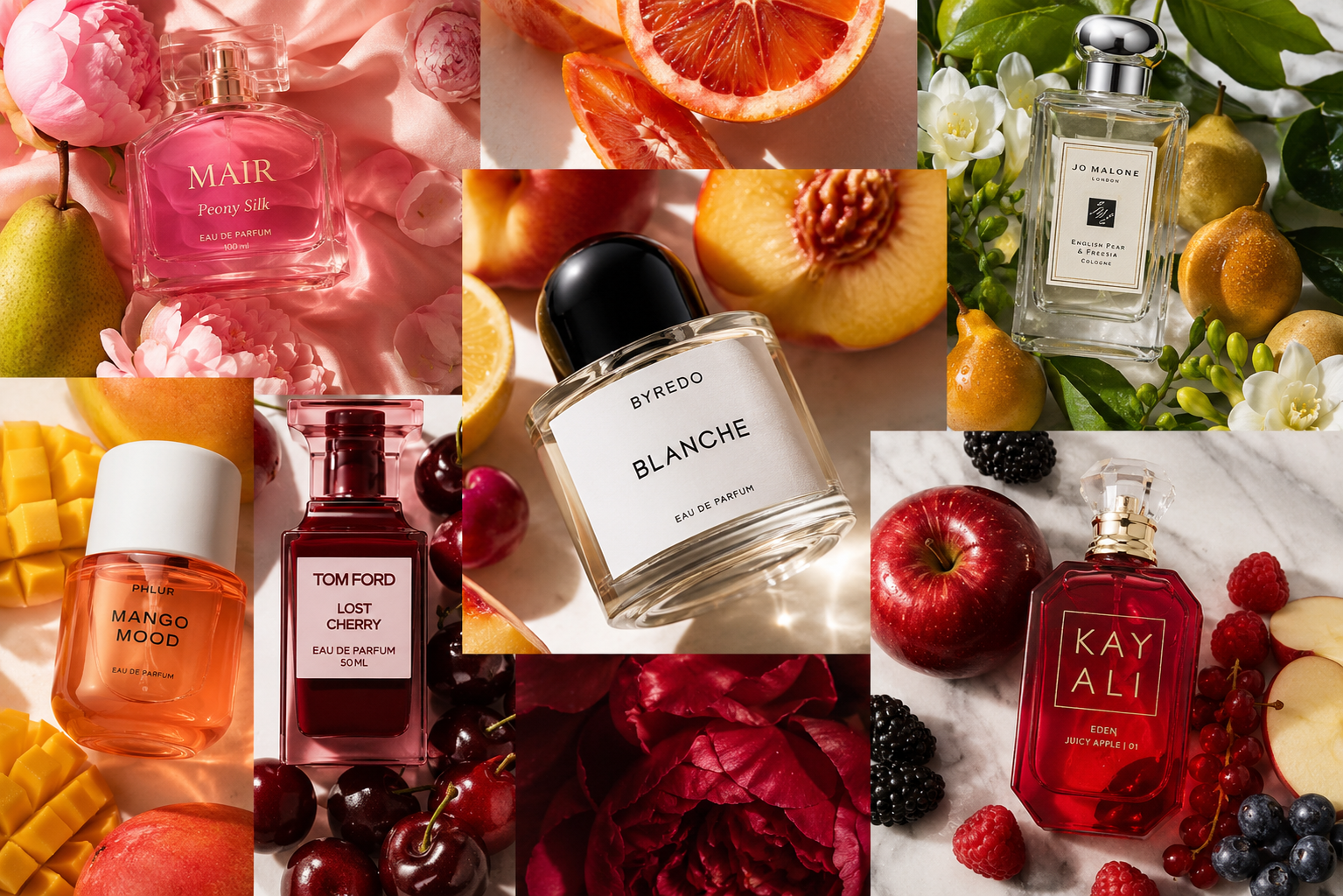
Fruity notes used to signal drugstore. Here's the science behind their luxury glow-up.
Fruit in fragrance used to be a red flag. Synthetic, cloying, the olfactory equivalent of a plastic fruit bowl sitting in direct sunlight. Then something shifted. At Esxence 2026, the industry's most forward-thinking perfumers confirmed what noses had been quietly noticing: fruity notes have completed their luxury rehabilitation, and the science behind that transformation is worth understanding.
This isn't a trend. It's a reclassification. The same olfactory family that once defined mass-market body sprays is now anchoring some of the most sophisticated compositions on the fine fragrance market. The question worth asking isn't why, it's how.
Not sure which MAIR fragrance is yours? The quiz takes 60 seconds.
The Original Problem With Fruit in Perfume
Early synthetic fruity molecules were blunt instruments. They replicated the surface sweetness of fruit without any of its complexity. A synthetic peach accord from the late 1990s smelled like peach candy, not peach skin. A raspberry note telegraphed sugar before it telegraphed anything else. The molecule did its job technically, but it had no depth to hide behind.
Concentration made things worse. In mass-market formats, fruity notes were pushed loud to project on cold skin in a department store. That amplification stripped away any nuance the accord might have carried. Loud plus synthetic plus sweet equals cheap. The association stuck for almost two decades.
The rehabilitation started in the lab, not on the shelf.
How Ingredient Sourcing Changed Everything
Natural-derived fruity materials behave differently from their synthetic counterparts because they carry facets. Real blackcurrant bud absolute contains sulphurous, catty, almost savoury edges underneath its fruit. Real fig leaf absolute reads woody and milky before it reads sweet. These aren't clean, predictable molecules. They're complex, sometimes uncomfortable, and that discomfort is exactly what makes them smell expensive.
Sourcing discipline matters here as much as the ingredient itself. The provenance conversation happening in floral ingredient sourcing has extended into fruit-adjacent materials. Where a citrus absolute comes from, how it's extracted, what season it was harvested , all of that changes the aromatic profile in ways that a synthetic shortcut simply can't replicate.
And when brands invest in traceable, high-grade raw materials, the cost signals that quality back to the nose.

Why Pairing Is the Real Sophistication Play
Clean fruit reads as simple. Fruit positioned inside a complex aromatic architecture reads as refined. The perfumers leading the Esxence conversation weren't presenting fruit as the star. They were using it as a structural decision, a way to introduce luminosity into heavier bases without tipping into sweetness overload.
Pear paired with orris reads powdery and cool. Lychee sitting on a vetiver base loses its sugary edge and takes on an almost mineral quality. Quince threaded through a resinous amber accord becomes golden rather than sticky. The fruit doesn't disappear. It transforms, because its neighbours change what the nose interprets.
This is the chemistry truth that most fragrance marketing skips over: no note in a perfume exists in isolation. Every molecule shifts in the presence of every other molecule. Skilled pairing is what separates a fruity accord that reads expensive from one that reads like a body wash.
Fruit didn't get more expensive. Perfumers got more precise. Knowing the difference is what makes you a better buyer.
Concentration and the Quiet Revolution
Extrait and parfum concentrations changed the fruity note conversation more than any single ingredient discovery. At higher concentrations, fruity materials slow down. Instead of evaporating fast and loud in the top notes, they linger, blend deeper into the mid, and reveal facets that lower concentrations burn off too quickly to show.
This matters practically. Longevity in high-concentration formats gives fruity accords room to move through their full aromatic arc. What opens as a bright, clean kumquat might settle into something that reads closer to white musks and warm skin hours later. That evolution is what the nose registers as sophistication.
What This Means When You Choose a Fragrance
The rehabilitation of fruity notes gives you more creative permission as a fragrance wearer. A blackcurrant opening or a ripe fig heart isn't a concession to easy pleasantness anymore. It's a deliberate structural choice made by someone who understands exactly what those molecules do when they hit your skin chemistry.
Your skin's pH and warmth will influence how a fruity accord reads on you specifically. What smells sharp and bright on a cool day might read richer and deeper in summer heat. The fruit note isn't changing. Your skin's interaction with it is.
MAIR was built on the belief that what you wear should reflect something real about who you are, not a shortcut to what's currently considered acceptable. Fruity notes earning their place in fine fragrance is part of a larger shift: the fragrance world is finally rewarding precision over prestige signalling. The woman who understands that distinction doesn't follow the rehabilitation. She leads it.
Not sure which MAIR fragrance is yours? The quiz takes 60 seconds.