Why Most Oud Fragrances Don't Contain Real Oud: The Agarwood Deception Explained
Oud is the most faked ingredient in luxury fragrance. Here's how to tell what you're actually buying.
Oud is having a cultural moment that has nothing to do with oud. The ingredient flooding mainstream body mists, celebrity flankers, and fast-fashion fragrance counters right now is, in most cases, a synthetic molecule designed to gesture at something ancient, rare, and genuinely extraordinary. Knowing the difference changes everything about how you shop.
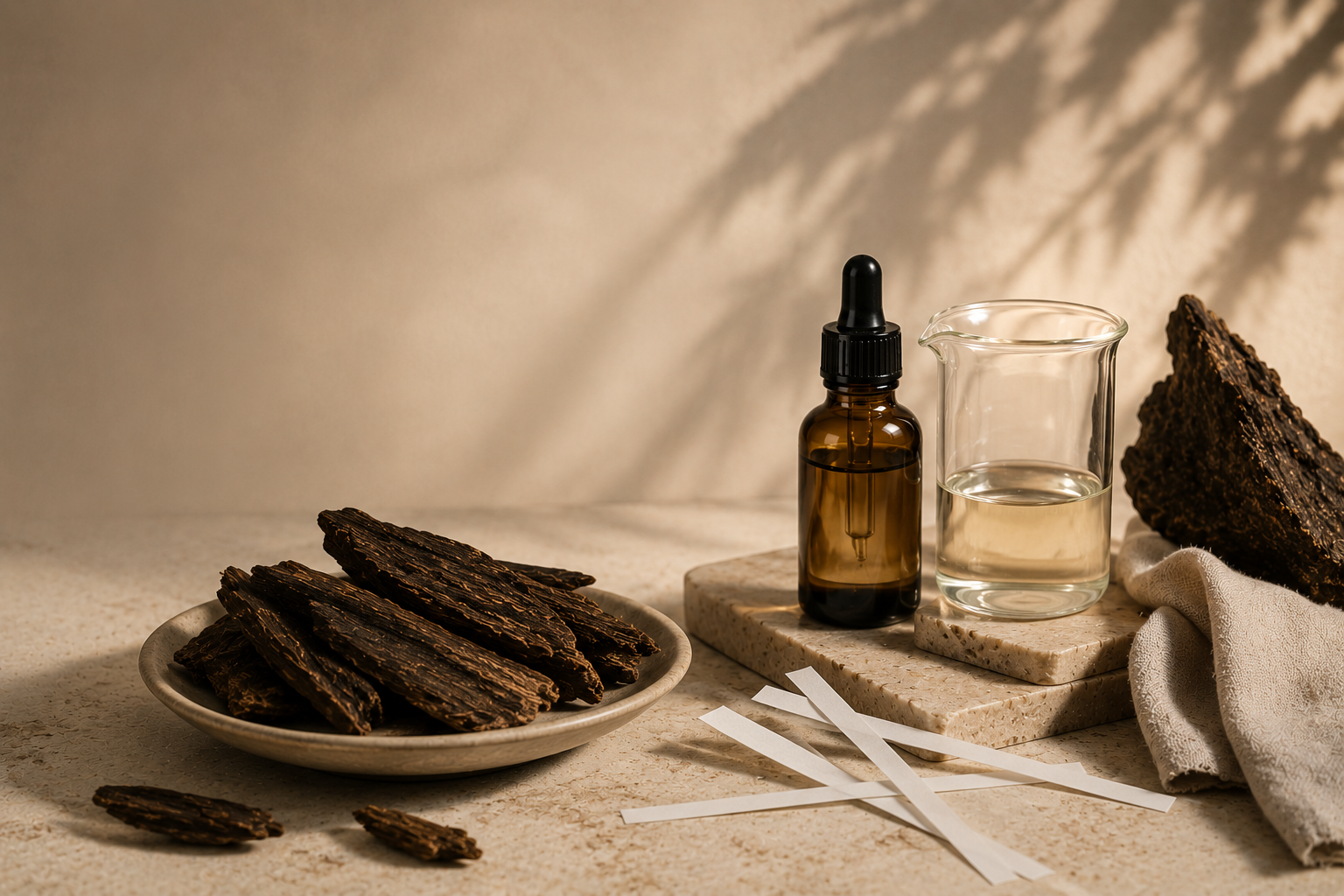
Real agarwood, the resinous heartwood that produces true oud, comes from a specific genus of trees, Aquilaria, found across Southeast Asia and parts of the Middle East. The magic happens only when the tree becomes infected by a particular mould. In response, it produces a dark, dense resin. That resin is agarwood. It takes decades to form, and wild trees producing it are now critically endangered.
That's why almost nobody is using it. Not in a £12 body mist. Not in a celebrity-fronted flanker. Not even in many bottles sitting behind the glass at department store counters.
Not sure which MAIR fragrance is yours? The quiz takes 60 seconds.
Three Versions of Oud , and Only One Is the Real Thing
Wild agarwood is the benchmark. Trees untouched by cultivation, infected naturally, producing resin over 40 to 100 years. The oil extracted from this wood, through hydro-distillation, trades for thousands of pounds per kilogram. It smells like nothing else on earth: animalic, smoky, sweet, woody, medicinal, and deeply human all at once. Its complexity shifts on skin over hours.
Cultivated oud sits in the middle. Farmers inoculate Aquilaria trees with the relevant fungal agent to trigger resin production, then harvest after 10 to 20 years. The result is genuine agarwood oil, cheaper than wild but still expensive, still complex, still botanically honest. Many serious independent fragrance houses use cultivated oud as a responsible, traceable alternative to wild-harvested material.
Synthetic oud molecules are a different story entirely. Aromachemicals like Oud Fleur, Agarwood Base, or various proprietary captive materials mimic the idea of oud at a fraction of the cost. They're not inherently dishonest when used well; skilled perfumers build beautiful compositions around them. The problem is when a product calls itself an oud fragrance with the same confidence as one built on real agarwood oil, and the price point tells you everything you need to know.
A bottle that costs £25 contains no real oud. Period. The math doesn't work. The real cost behind luxury fragrance is almost always tied directly to the cost of its raw materials, and wild or cultivated agarwood is among the most expensive materials in perfumery.

Why This Matters More Than Fragrance Snobbery
This isn't about gatekeeping. It's about understanding what you're paying for, and what story a fragrance is actually telling you. When a brand markets something as oud and charges luxury prices for a synthetic accord, that's a transparency failure. When a brand charges luxury prices for genuine cultivated agarwood, uses traceable sourcing, and explains its process, that's integrity.
The endangered status of wild Aquilaria trees adds another layer. Demand for real oud, driven partly by the mass-market trend, creates pressure on wild populations in countries like Cambodia, Indonesia, and India. Buying from brands that specify cultivated, responsibly sourced agarwood is the informed choice. The sourcing story behind an ingredient is always part of what you're wearing.
Synthetic molecules also behave differently on skin. Most synthetic oud accords are linear, meaning they open and close in roughly the same register. Real agarwood oil evolves. It interacts with your skin's warmth and pH in ways a lab-constructed molecule simply doesn't replicate. Your skin chemistry is part of why the same oud fragrance smells different on two people, and that effect is far more pronounced with natural materials.
The most powerful thing a fragrance lover can do is demand transparency. Ask what's actually in the bottle. The answer tells you who made it and why.
How to Read a Bottle Before You Buy
Ask three things. Does the brand specify wild, cultivated, or synthetic oud? Does the price point support the use of real agarwood oil? And does the brand talk about where its materials come from? Vague "oud accord" language on a budget bottle is your answer right there.
Understanding what's actually in your fragrance isn't niche knowledge. It's the foundation of wearing something that's genuinely yours, not a mass-produced approximation of a material too rare and extraordinary to be everywhere at once.
Not sure which MAIR fragrance is yours? The quiz takes 60 seconds.